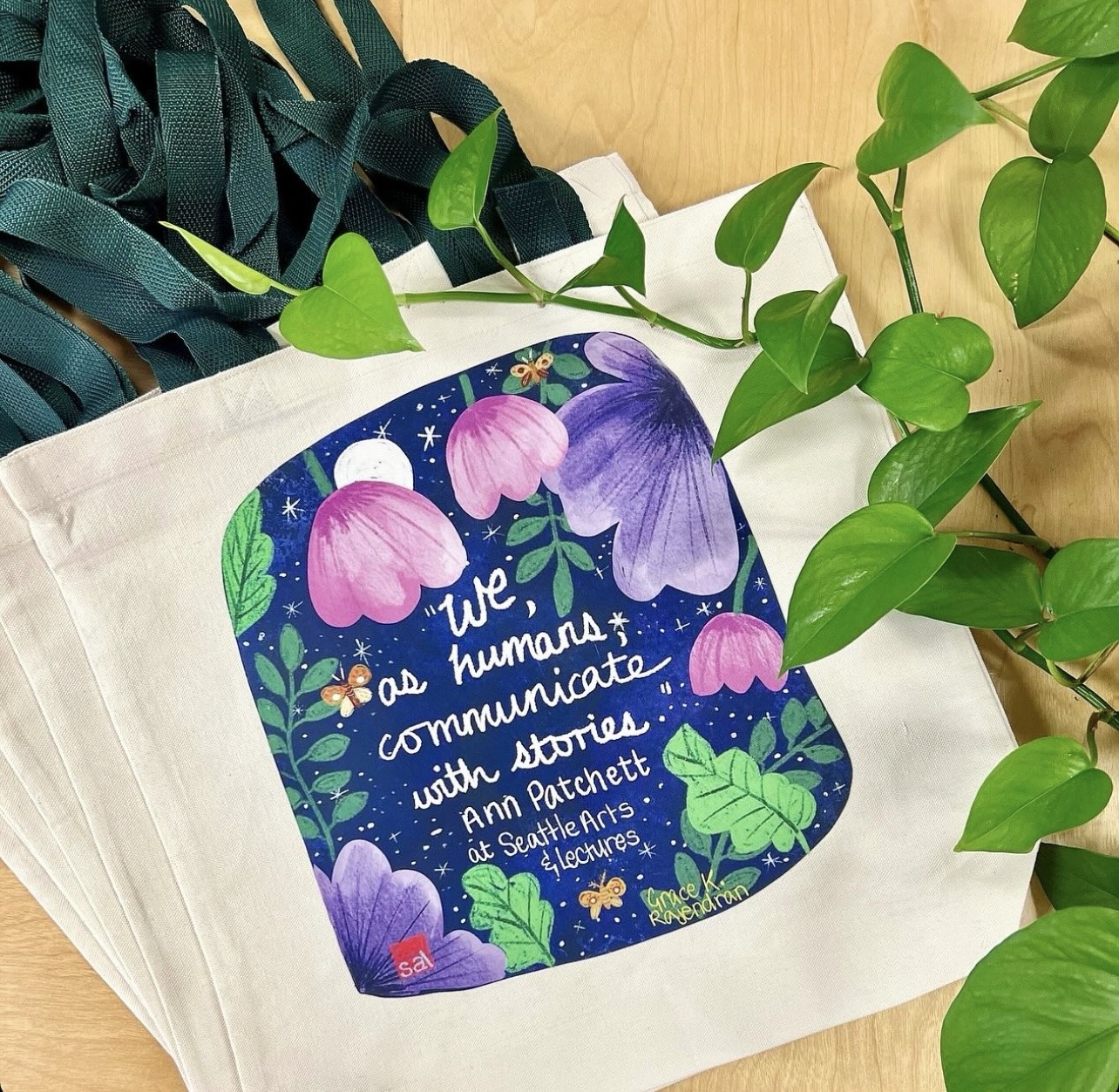
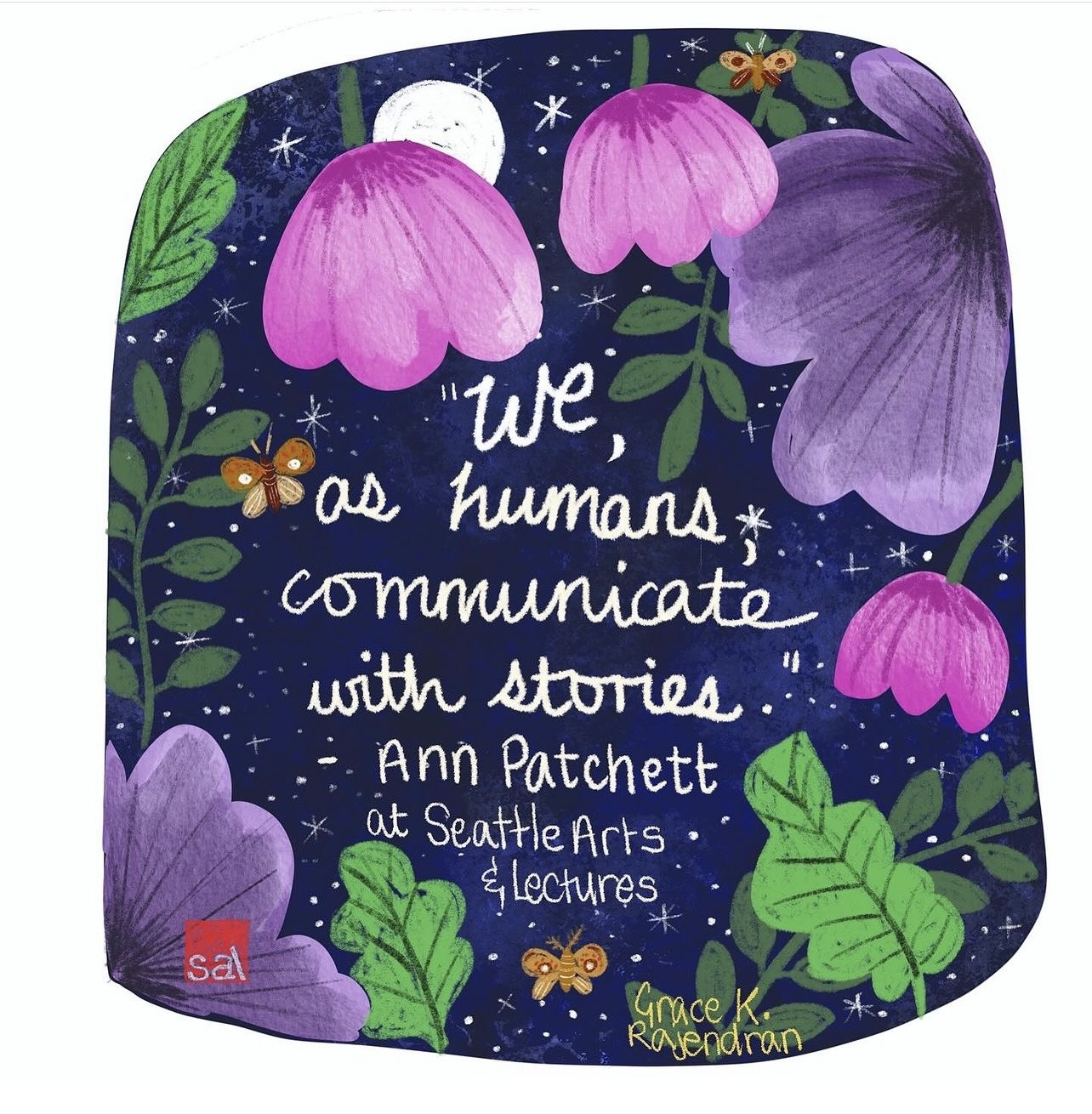
I LOVE literary totes and have quite the collection – totes I’ve bought, totes I’ve been sent by publishers – and now, it’s a dream come true that my own art is on a literary tote too!!! This features a quote from the Seattle Arts & Lectures event back in September 2023 with Ann Patchett in conversation with Melinda French Gates. I was struck by the beauty of something she said during this event – “We, as humans, communicate with stories.” – so I illustrated the quote, which now lives on forever in the form of these beautiful tote bags available through Seattle Arts & Lectures.
The totes are 100% cotton in a natural canvas color, 15″W x 14″H x 3″D, with 22″ webbed handles in forest green.
You can purchase the tote bags and support the transformational work of Seattle Arts & Lectures HERE.
http://gracerajendran.com/wp-content/uploads/2017/09/GraceLogo2.jpg00Gracehttp://gracerajendran.com/wp-content/uploads/2017/09/GraceLogo2.jpgGrace2024-02-02 14:10:002024-02-02 14:33:28Seattle Arts & Lectures Totes Featuring My Art
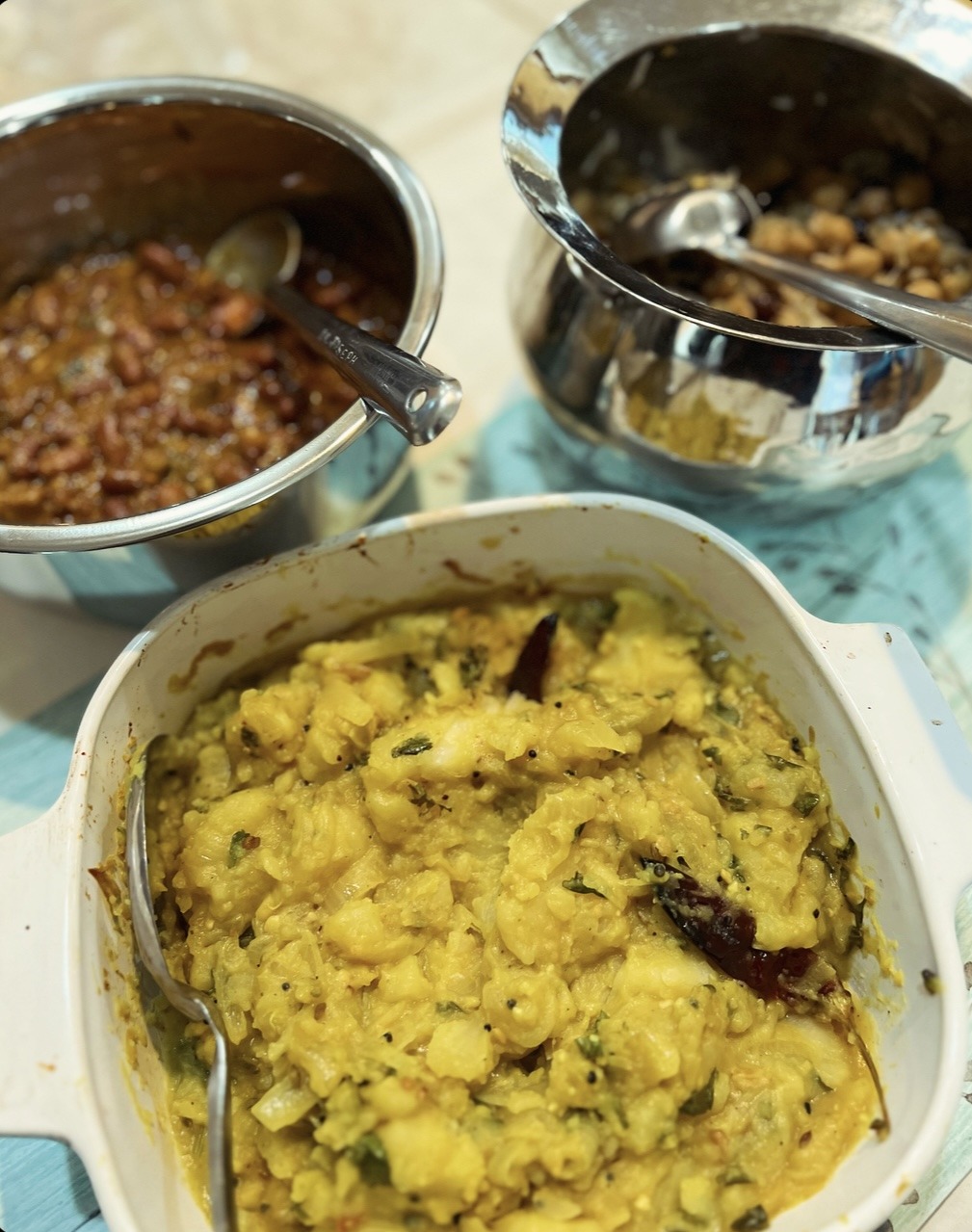
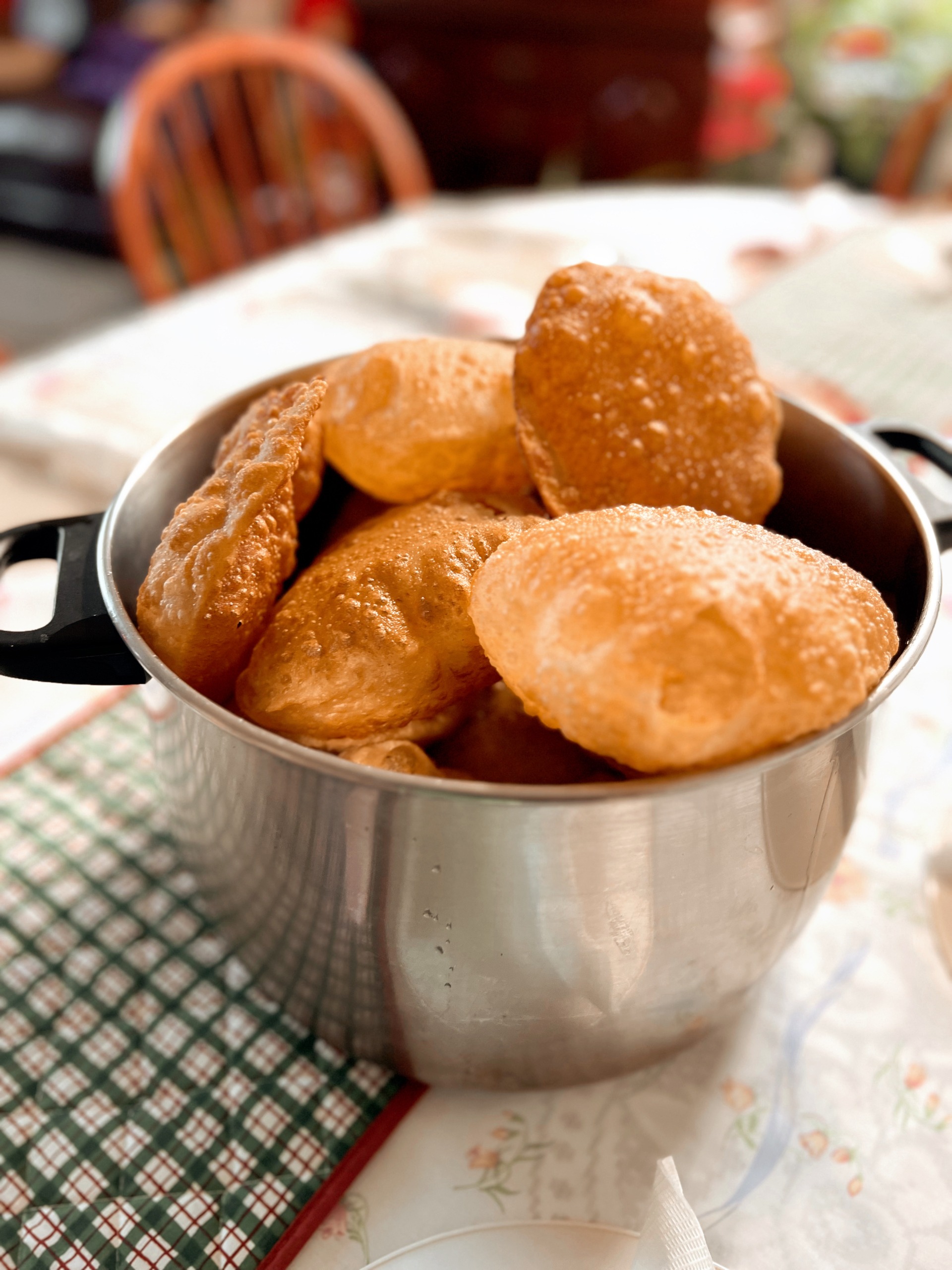
Over the past few years, our new family tradition has been to gather on New Year’s Day and make pooris and potatoes, while working on a jigsaw puzzle all day. Pooris are a puffy, deep-fried Indian flat bread and they taste especially good with a spicy, tangy, potato curry. It is one of my favorite meals and my mother made it for almost all of my childhood birthdays!
My mom is such an amazing cook that I wanted to share her recipe for these potatoes with you all, in case you would also like to try making some! So, without further ado, here’s the recipe to Shakunthala’s Potato Bhaji:
POTATO BHAJI
INGREDIENTS
3 medium Russet potatoes cooked in water with skin. Remove skin after it is cooked and
coarselymash.
1 medium yellow onion, chopped
1teaspoon black mustard
1 teaspoon ofurad dal
2 whole dry red chilies
2hot green chili peppers, split
5-6 curry leaves
1 inchfresh ginger finely chopped
1⁄2 teaspoon turmeric powder
1 tablespoon lemon juice
Salt totaste
2-3 Tablespoonvegetable oil
2tablespoon cilantro leaves, coarsely chopped
1 cupwater
STEPS
Step 1: Heat oil in a wide pan and first add mustardand when itpops, add urad dal, dry red chilies, greenchilies, curryleaves, ginger, onion, turmeric powder, and saltcontinuing to sautéuntil the onion becomestranslucent.
Step 2: Add water and lemon juice and bring it to boil, then add potato and cilantro while mixing well until it isthick and loose. Transferto serving dish and enjoy!
And here’s what pooris look like! If you don’t feel like making pooris, you can also enjoy these potatoes with rice or stuffed into a tortilla!
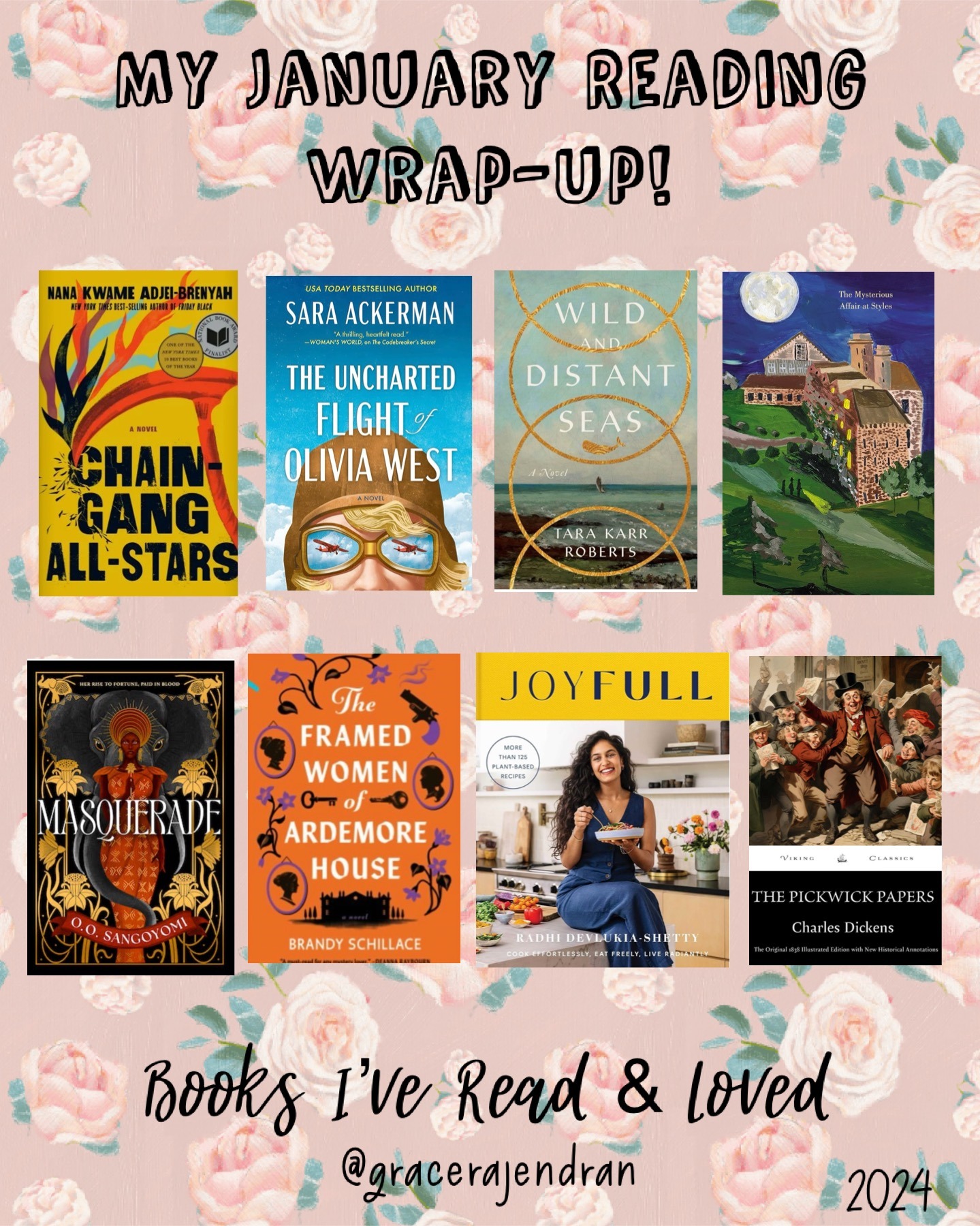
Two were for a book club: Chain-Gang All-Stars (for my book club at work, since we will be hosting the author soon) and The Mysterious Affair At Styles (for the Official Agatha Christie reading challenge)
One was for my Ocean-themed Reading Challenge: Wild and Distant Seas
Two were for professional review: JoyFull and Masquerade (I’ll post the reviews when they are published)
Two were books that I received from publishers: The Uncharted Flight of Olivia West and The Framed Women of Ardemore House
And I am slowly reading through a copy of The Pickwick Papers this year as that was a holiday gift from a friend last year. I’ll be reading a little bit of it every month this year until I’m done.
I don’t rate the books I read as I don’t like comparing things that are so different and wonderful in their own ways. If I don’t like something, I just don’t finish it or post about it. With these posts, I just want to share the books I loved so that you can check it out for yourself and see if it suits your tastes! Instead of a rating system, I like to use one word or phrase to describe books and, if you’re interested in longer reviews, please check out my Instagram (@gracerajendran) ! :
I’ve made a collection of all of these books on Bookshop.org, where you can also read more about them or purchase a copy for yourself. If you do, be sure to let me know on Instagram or in the comments here – I would love to hear what you were excited to read!
The Pickwick Papers: I’ll come up with a word when I’m finished with it 🙂
I really enjoyed reading all of these and got to experience a wide range of genres – fiction, speculative fiction, classics, fantasy, mystery, and even a cookbook! I usually like to read an art instruction book or a nature book during the month as well but, as you can see, I really didn’t have time to add those in – January really did fly by for me! How did it feel for you?
Happy New Year! May 2024 bring you many joys and wonderful books to read!
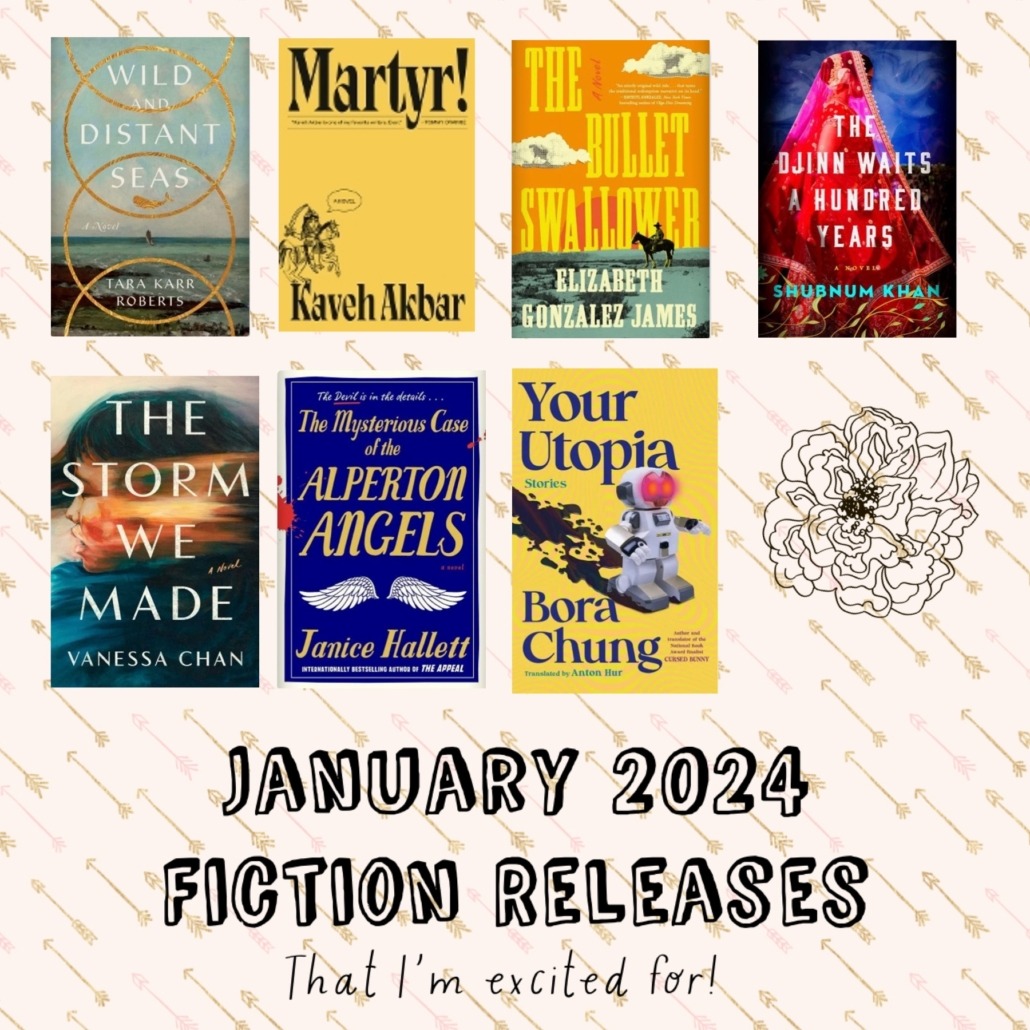
In case you’re looking for a new read in the new year, here are some January releases that I’m particularly excited about. This post is all fiction: literary, romance, science fiction, etc. I will post another list soon for nonfiction.
If you’re interested in reading more about each book or purchasing them, click on the book title to be sent to the book on Bookshop.org. Every purchase using one of my links helps support my website. You can also check out my entire January 2024 Fiction list on Bookshop.org by clicking here: January 2024 Fiction Book Releases
You all know how much I love Moby Dick and books about the ocean in general, so you can guess why I’m excited for this one! From the publisher’s page: “Wild and Distant Seas takes Moby-Dick as its starting point, but Tara Karr Roberts brings four remarkable women to life in a spellbinding epic all her own.”
MARTYR! by Kaveh Akbar (Jan 23) The publisher’s blurb calls this: “A newly sober, orphaned son of Iranian immigrants, guided by the voices of artists, poets, and kings, embarks on a remarkable search for a family secret that leads him to a terminally ill painter living out her final days in the Brooklyn Museum.”
THE BULLET SWALLOWER by Elizabeth Gonzalez James (Jan 23) I got to meet Elizabeth on a pre-pub party over the summer and, therefore, got to read her incredible book early! This is a beautifully-written magical realism set in the American West. It will fill you with wonder and give you so much to ponder long after you read the last pages.
The publisher says: “The Bullet Swallower tackles border politics, intergenerational trauma, and the legacies of racism and colonialism in a lush setting and stunning prose that asks who pays for the sins of our ancestors, and whether it is possible to be better than our forebears.”
I was lucky to meet Vanessa during a pre-pub tour and so got to read this amazing book early! I was captivated from the first page. The storytelling is amazing and I really felt so much for the characters and their experiences in Malaya (present-day Malaysia) around WWII.
Publisher MarySue Ricci Books says: “A spellbinding, sweeping novel about a Malayan mother who becomes an unlikely spy for the invading Japanese forces during WWII—and the shocking consequences that rain upon her community and family.”
I also had the pleasure of meeting Janice last summer on a pre-pub tour and got to read her book early. This is an exciting and thrilling mystery told in the form of transcripts, Interviews, emails, WhatsApp messages etc. The story is very intriguing and the format of the novel makes the reader feel like an active and immersed participant!
Publisher Atria Books describes this as being “about a true crime journalist who revives a long-buried case about a cult—and finds herself too close to the story.”
YOUR UTOPIA by Bora Chung and translated by Anton Hur (Jan 30)
Publisher Algonquin Books describes it as “From the internationally acclaimed author of Cursed Bunny, in another thrilling translation from Korean by Anton Hur, this collection shares tales of loss and discovery, idealism and dystopia, death and immortality. ”
http://gracerajendran.com/wp-content/uploads/2017/09/GraceLogo2.jpg00Gracehttp://gracerajendran.com/wp-content/uploads/2017/09/GraceLogo2.jpgGrace2024-01-26 01:00:002024-02-02 19:47:35January 2024 New Book Releases
“For so work the honeybees, creatures that by a rule in nature teach the act of order to a peopled kingdom.” – William Shakespeare
One of the highlights of my summer was visiting some nearby lavender farms and, of course, where there is lavender, there are bees! In particular, bumble bees and honeybees are two of the main pollinators of lavender. These plants are very attractive to pollinators because they are rich in pollen and nectar and produce a large amount of linalool (a naturally occurring alcohol that occurs in many flowers and spice plants).
Honeybees are any of a group of insects in the family Apidae (order Hymenoptera) that in a broad sense includes all bees that make honey. However, what is commonly known as the domestic honeybee usually refers to the single species, Apis mellifera. Apis is Latin for “bee”. The first Apis bees appear in European fossils at the Eocene-Oligocene boundary – about 33 million years ago. However, these bees are thought to have their origins in South and South-East Asia.
Honeybees are social insects and live together in hives or nests. A colony generally contains one queen bee, a female; up to a few thousand drone bees, or males; and tens of thousands of female worker bees, the latter of which perform dancing movements inside the hive to communicate the location, quality, and distance of food sources to their fellow hive-mates.
Honeybees obtain all of their nutritional requirements from a combination of pollen and nectar. Pollen is the only natural protein source for honeybees and nectar is collected by worker bees as a source of water and carbohydrates in the form of sucrose.
During the winter, the bees draw closer together in the hive to conserve heat and, when nectar sources are low, the worker bees drag the drones out of the nest and do not let them return, thereby starving them and reducing the consumption of winter honey stores.
Most bees are polylectic, which means that they gather pollen from a wide variety of flowers. However, some bees collect pollen only from flowers of certain families or certain colors. Oligolectic bees gather pollen from only a few related kinds of flowers, which their mouths are adapted to.
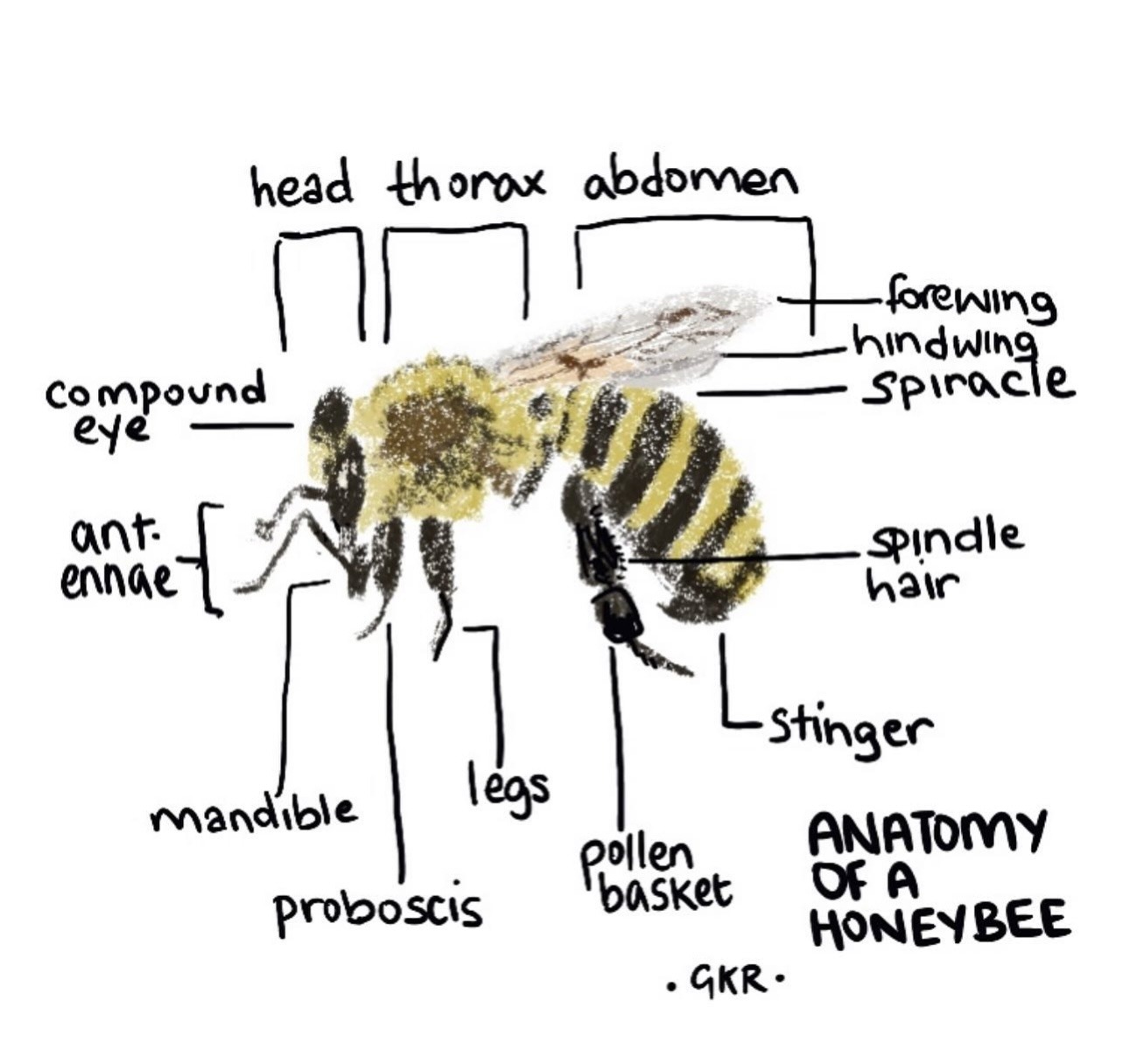
ANATOMY OF THE HONEYBEE AND THAT DREADED STINGER:
The head is the area of information gathering and food input. It contains the eyes and the mouthparts.
The thorax is the area of locomotion and contains 2 pairs of wings, 3 pairs of legs, and 3 pairs of spiracles for letting air in. Legs have pollen baskets, which is, as the name suggests, used to carry the pollen around. Its special concave shape and hairy edges help to keep the load in position while the bee flies.
The abdomen is the area of digestion and reproduction.
The sting is attached to the digestive tract and is designed, with barbs, to prevent the sting from being pulled out. When a worker bee stings, it tries to get away, but the barbs prevent the sting from coming out, so the sting breaks off and is left behind. The sting and accompanying venom gland will then continue to work on their own to pump venom into the victim, while simultaneously releasing a pheromone to mark the victim, alerting other bees to continue to sting them.
Lavender is such an enchanting color – pretty and serene. As a color – a combination of red and blue – it takes its name from lavender flowers. The word lavender, itself, comes from the Latin word lavare which means “to wash” and it’s no wonder, as the color evokes a clean crispness and is often found in soaps and bath and beauty products. Lavender flowers were used as perfumes since ancient Egyptian times.
Lavender is a gentle form of purple, a color used to signify royalty. And, indeed, lavender has a subdued and elegant feel to it. Often representing Spring and youthfulness, lavender has come to be one of the pastel hues associated with that season.
It is common to find that the word “lavender” can represent several slightly differing shades of pale purple, and that also makes sense since, if you look closely at lavender blossoms, there are many variations of purple hues contained within.
To mix lavender, you will need to combine a warm red with a cool blue. If you use more of the red, you will end up with the color lilac. If you use more of the blue, you will arrive at lavender. You can then add white to your mixture to create various shades and intensities.
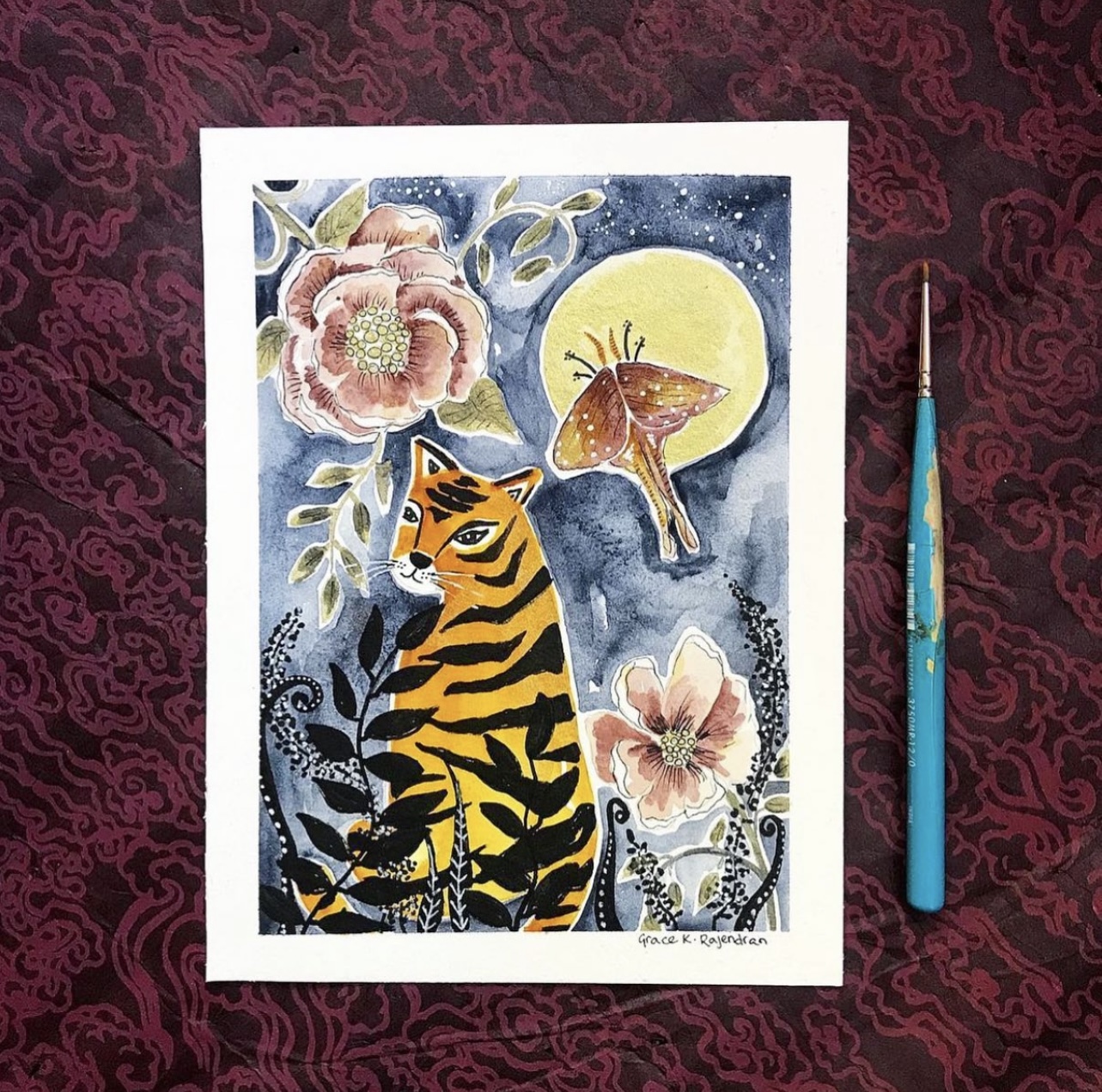
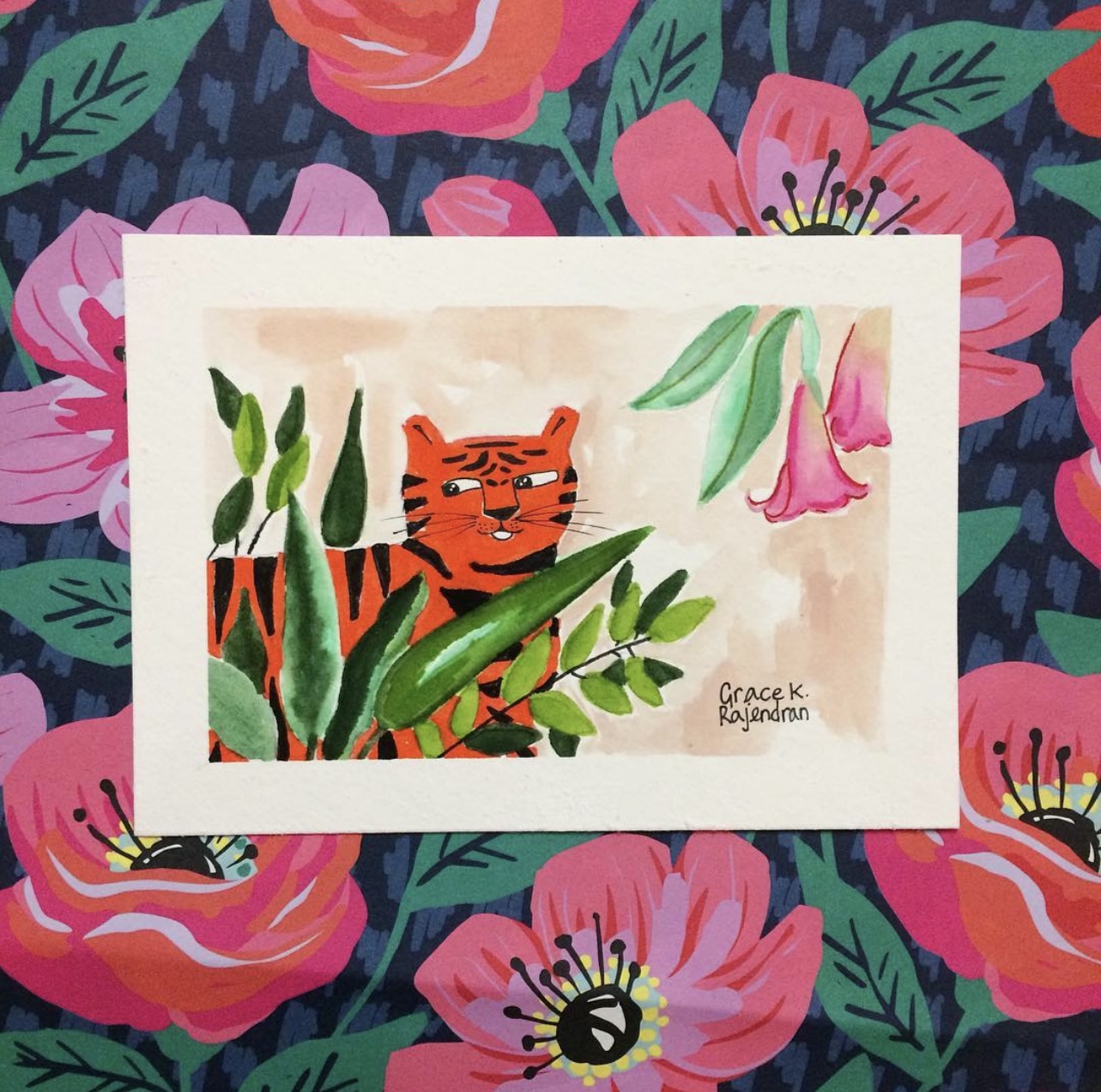
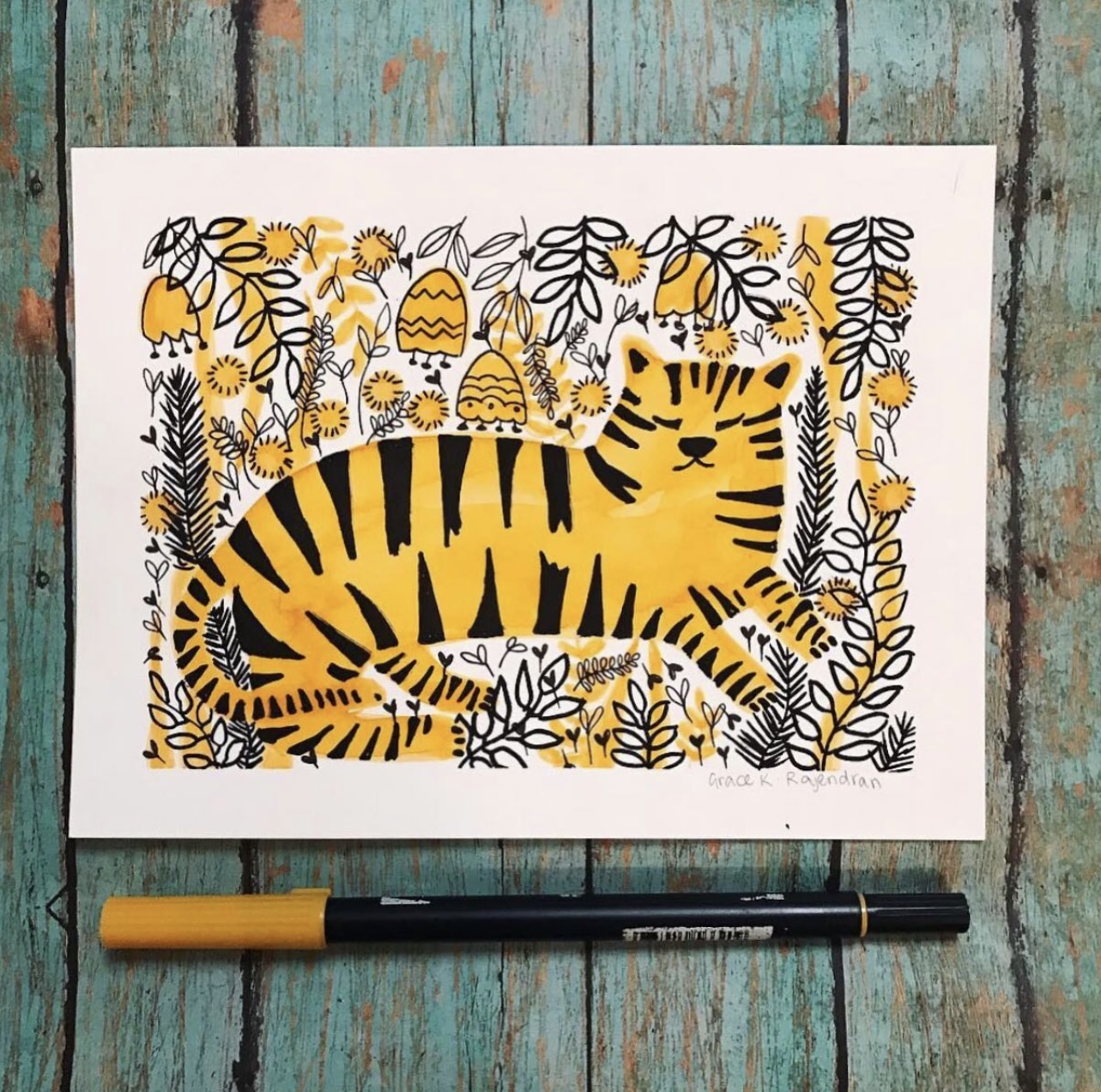
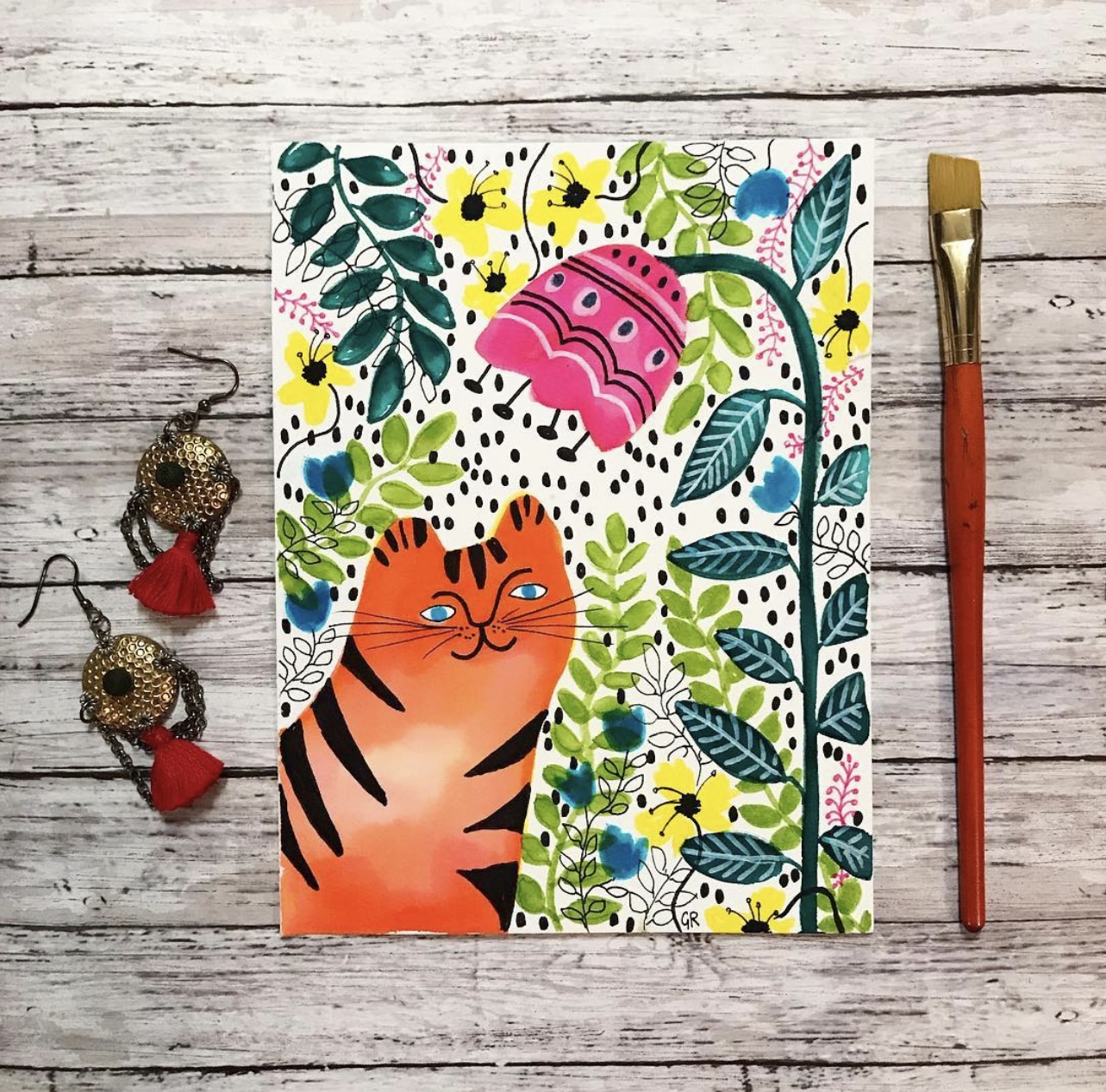
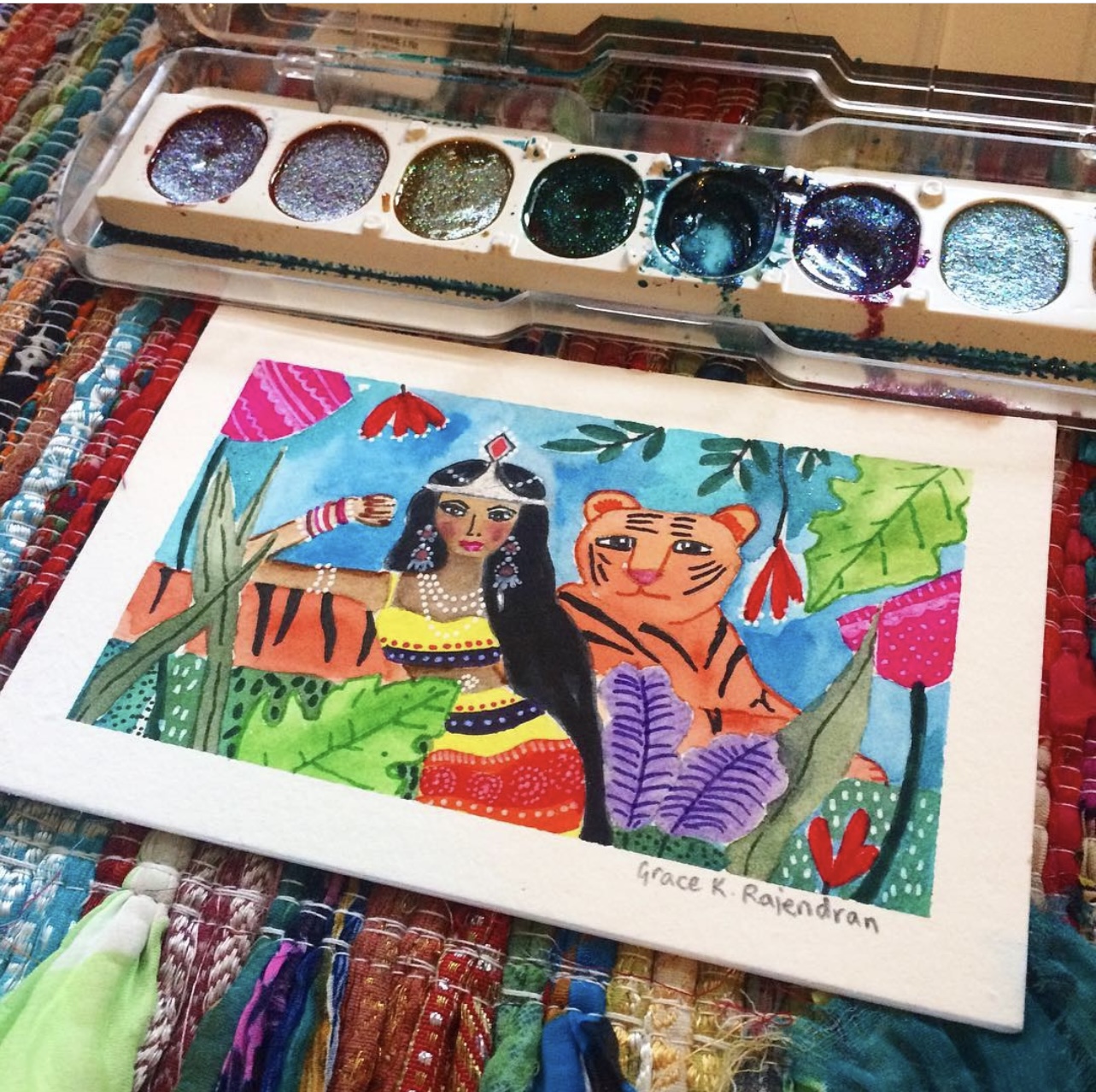
July 29th is celebrated annually as International Tiger Day, to raise awareness about these gorgeous, majestic – and endangered – creatures! I love tigers and often celebrate them through my art. In this post, I’ll be sharing some of my tiger art with you, as well as some fun facts about tigers and notes on their conservation.
Fun Fact: Tigers have been around for over 2 million years
“Anxious Tiger” art by Grace K. Rajendran
Historical Background
International Tiger Day was started in 2010 at the Saint Petersburg Tiger Summit in Russia, when it was discovered that 97% of wild tigers had vanished since the beginning of the 20th century.
Several countries, including India, Russia, and China, pledged to protect tigers. Thirteen tiger range countries collaborated to form TX2 and committed to doubling the tiger population by 2022, which was the Chinese year of the tiger.
To read more about TX2, check out the World Wildlife Fund’s TX2 page HERE.
Fun Fact: Their stripe patterns are all unique, just like human fingerprints!
“Yellow Tiger Garden” Art by Grace K.Rajendran
Fun Fact: Unlike most cats, tigers love to swim!
Some Conservation Highlights
In India, Project Tiger, which was started in the early 1970s, with 268 tigers now has over 3000! This great news also illustrates how tied together issues of ecology and conservation are because, with the growing number of tigers in the wild, one now has to address issues of habitat and prey loss and the potential for tigers to enter spaces with humans more and more. Some of the ways this is being addressed is to look at development through a lens of ecological preservation: for example, creating safe passages for tigers and other wildlife when highways are built and preserving large swaths of natural habitat.
“Tiger & Tulip” Art by Grace K. Rajendran
As we celebrate the good news, we also need to keep in mind that there is still a way to go. On average, two tigers are rescued from traffickers very week and there are still more tigers in captivity than in the wild.
To learn more about ways help tigers, check out legitimate nature organizations, such as the World Wildlife Fund for more info and resources.
Fun Fact: India has the greatest number of wild tigers, and this makes up over half the tiger population of the world!
http://gracerajendran.com/wp-content/uploads/2017/09/GraceLogo2.jpg00Gracehttp://gracerajendran.com/wp-content/uploads/2017/09/GraceLogo2.jpgGrace2023-07-29 15:24:192023-07-29 15:29:56International Tiger Day
“The air was fragrant with a thousand trodden aromatic herbs, with fields of lavender, and with the brightest roses blushing in tufts all over the meadows.”
-William C. Bryant
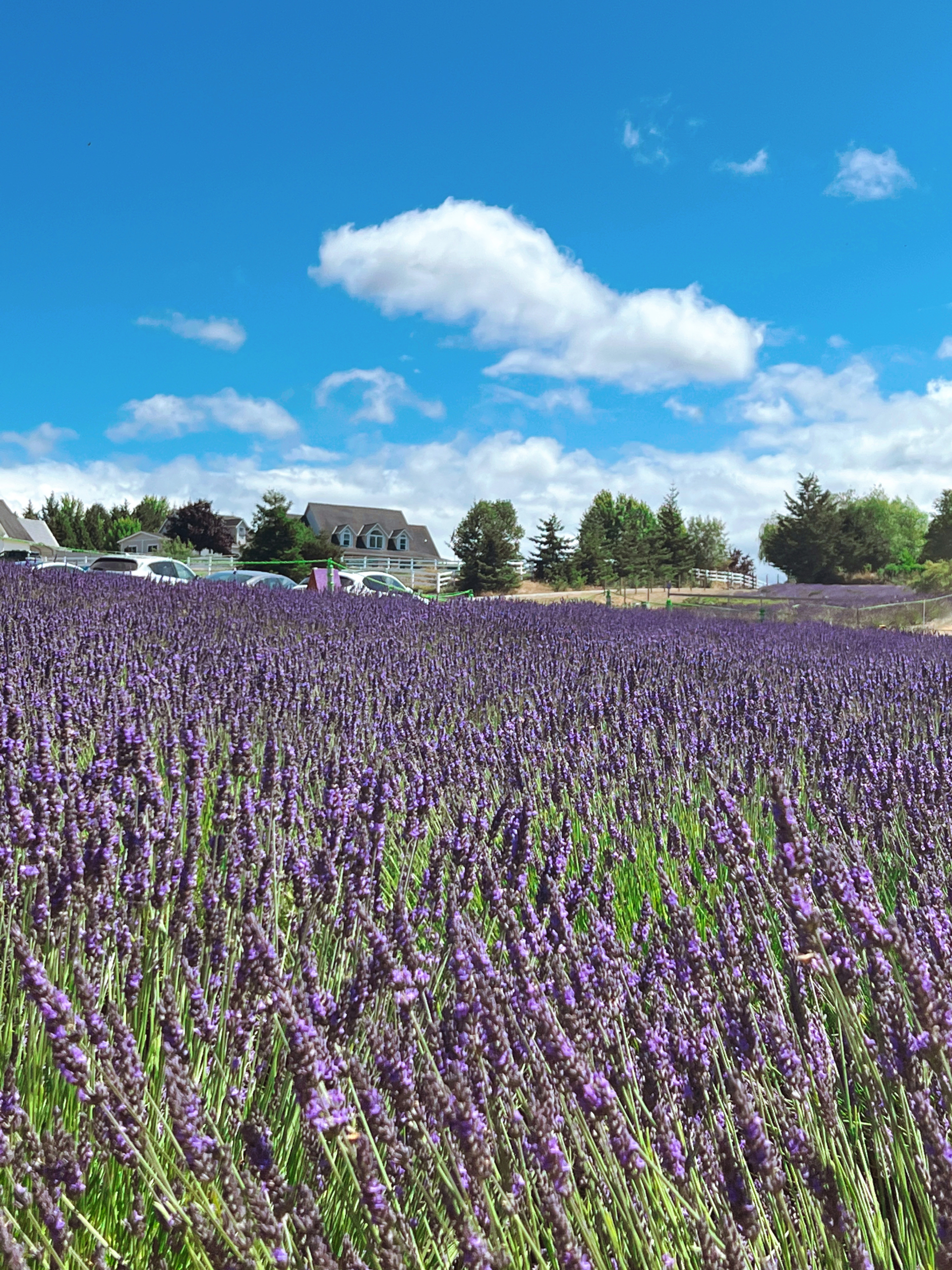
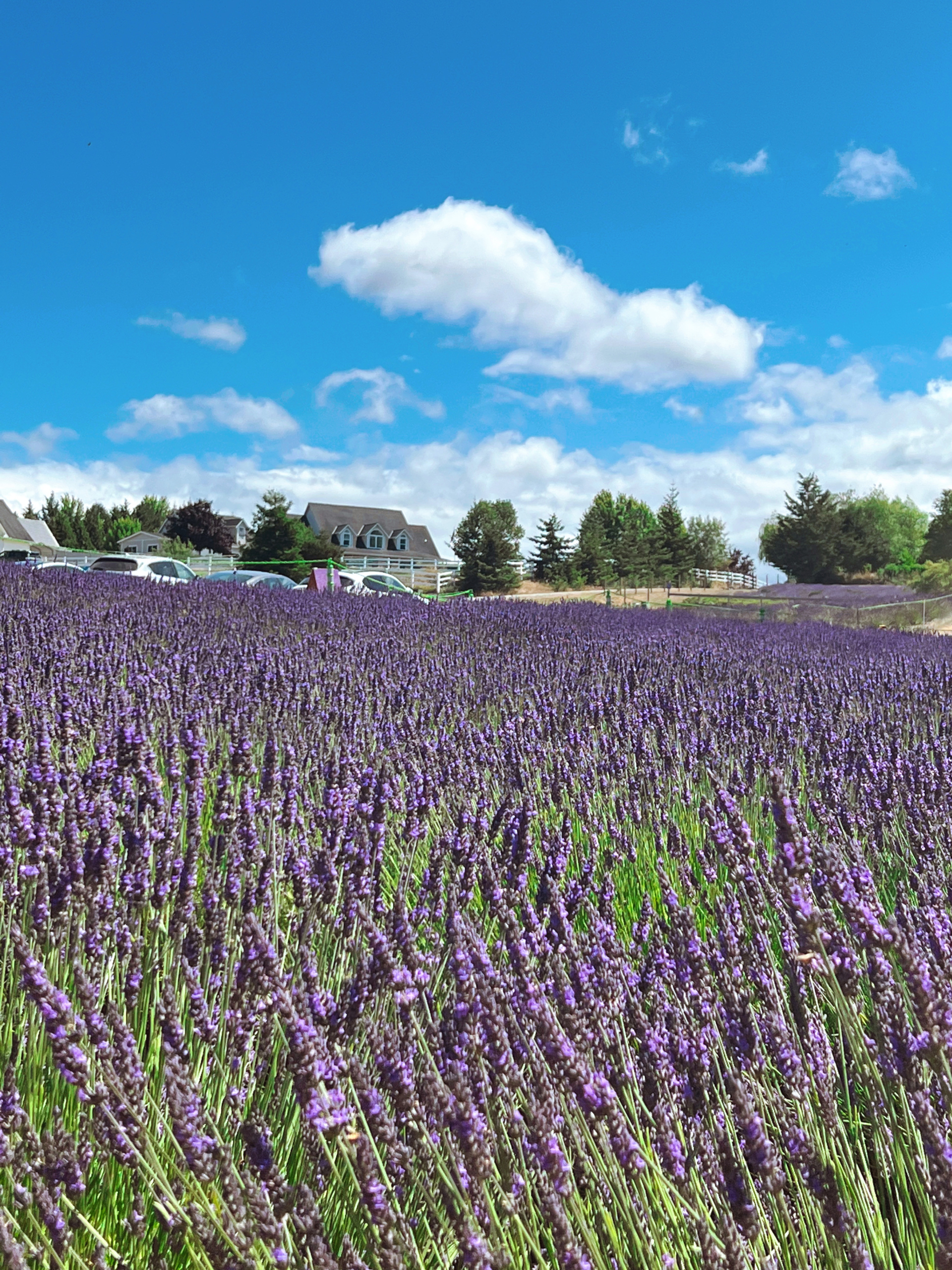
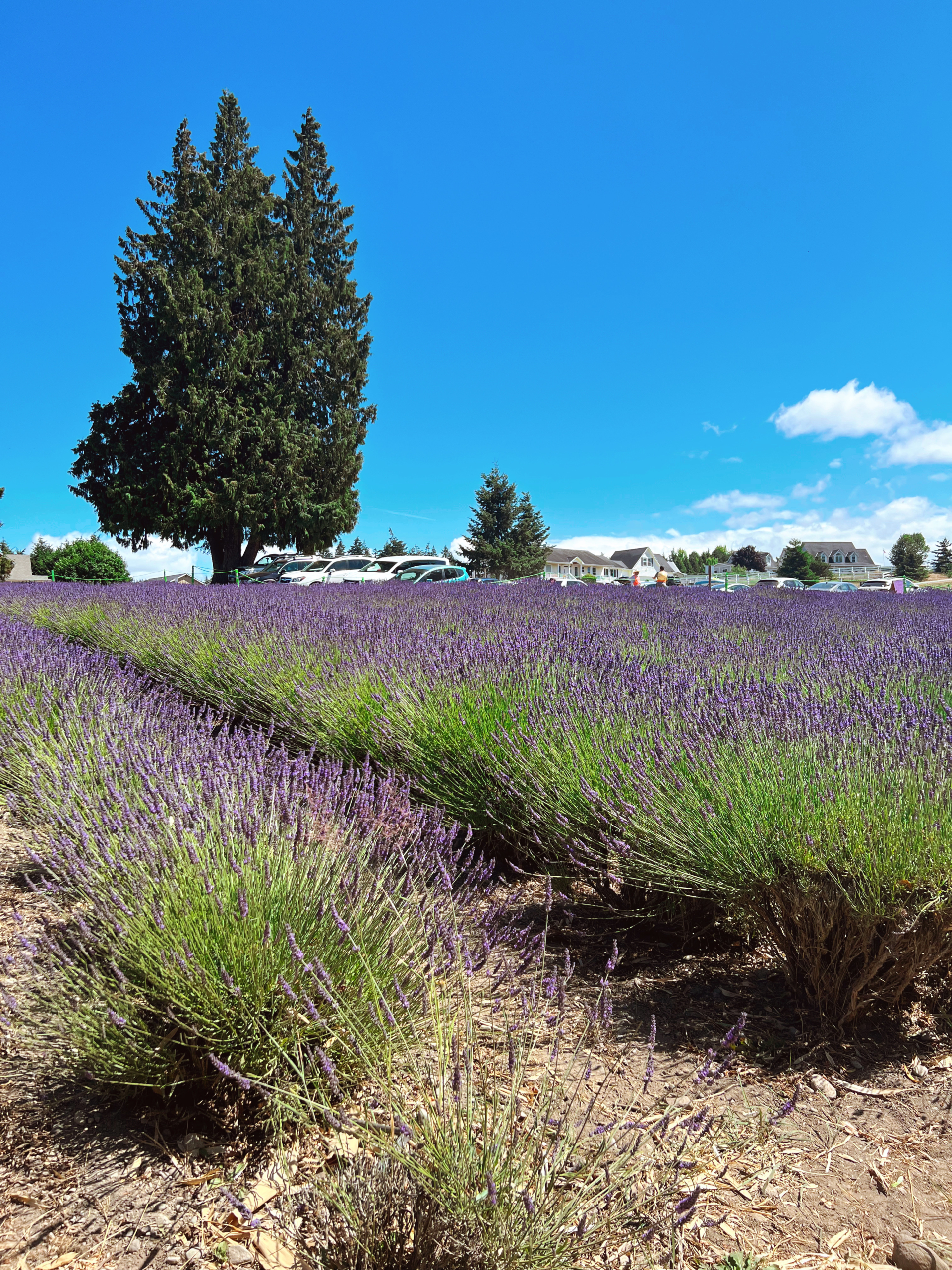
Recently, I was transported to the delights of the French countryside right here in Washington State, at the annual Sequim Lavender Festival! For three days, the entire town is adorned in purple flags heralding the location of the festivities and several dozen friendly volunteers are ready and waiting to guide you around the many attractions.
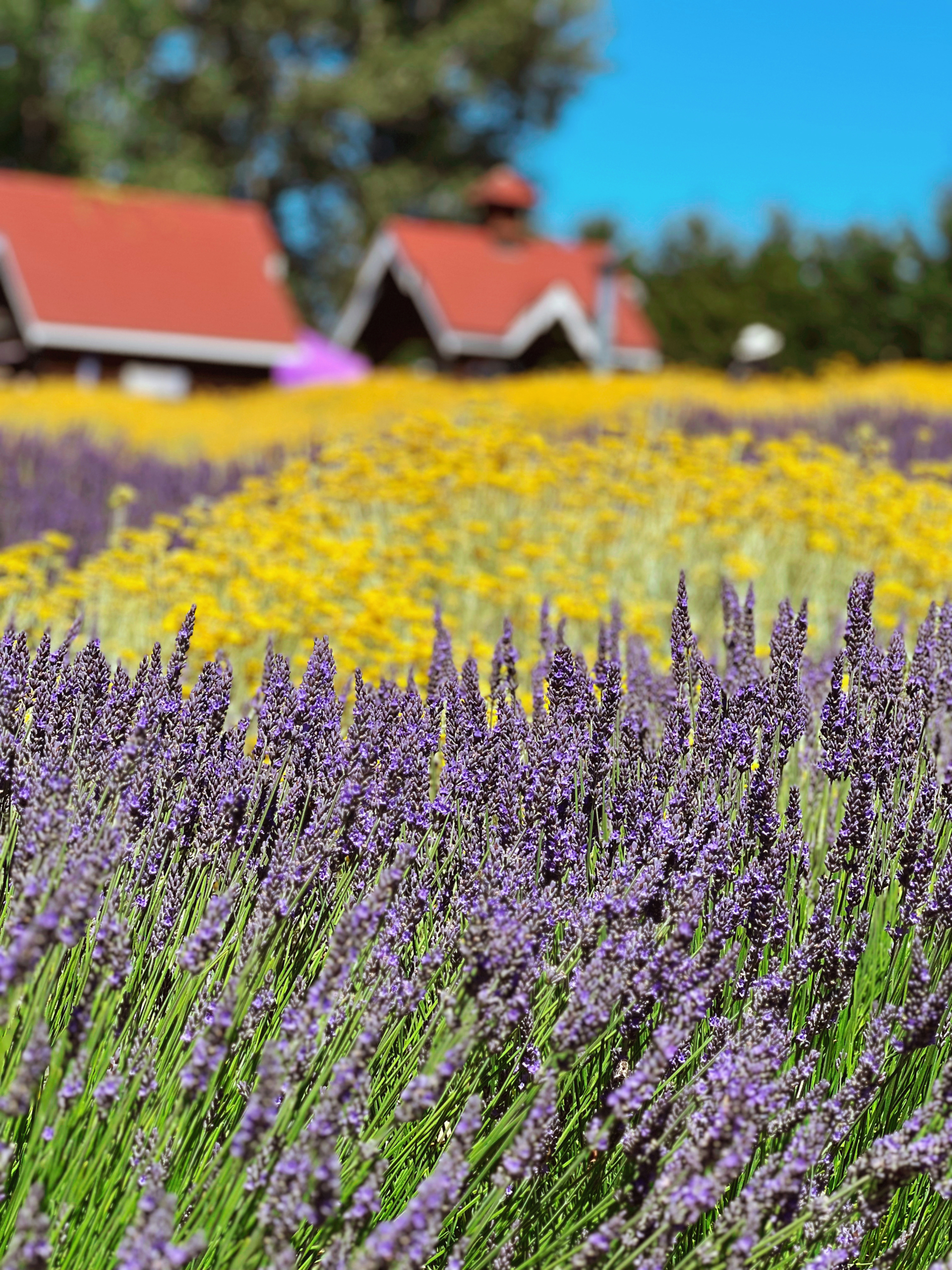
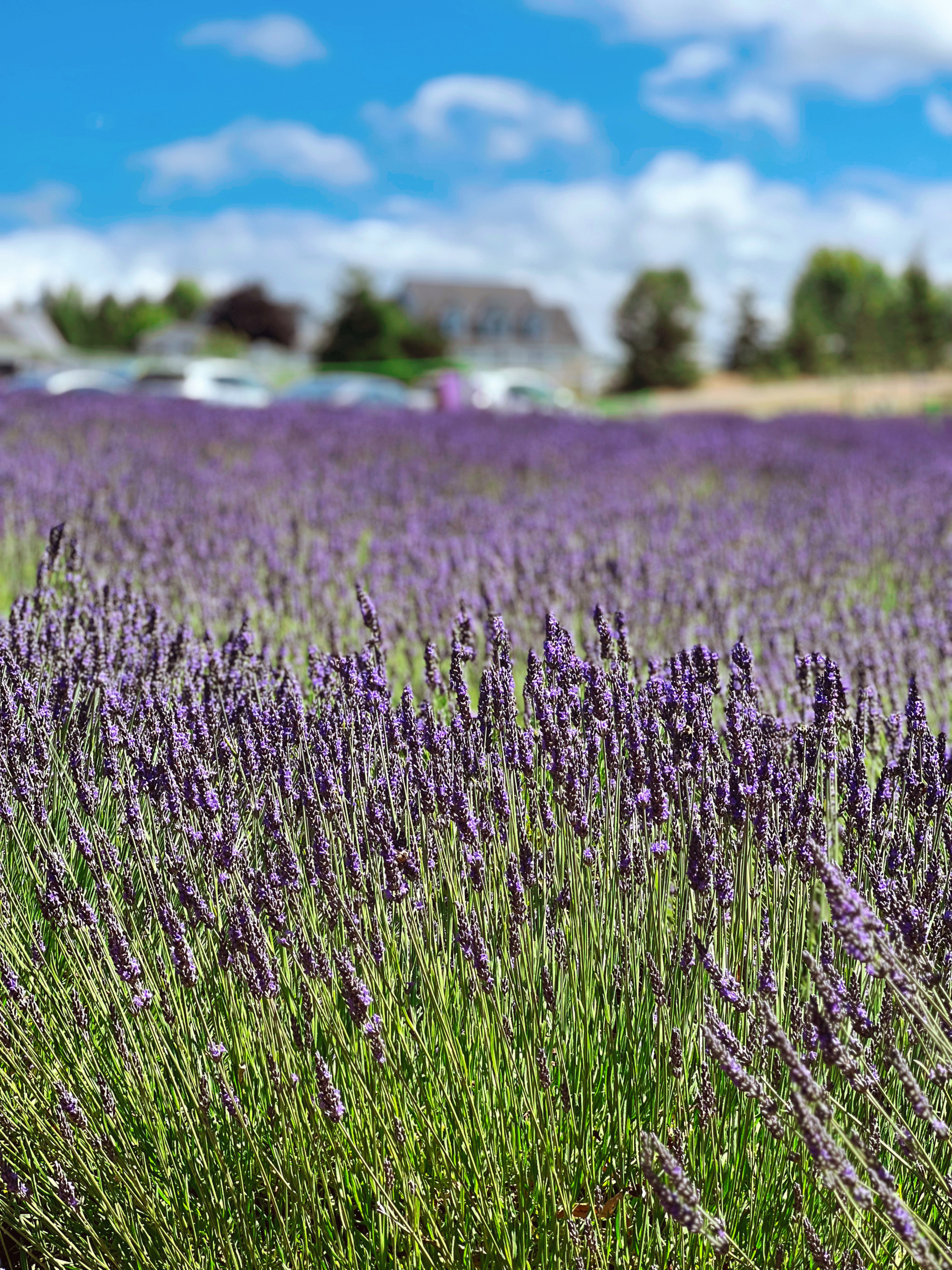
The sun-drenched landscape of Sequim is already dotted with pretty and fragrant lavender plants on every city block but is especially dazzling from June through September, when the farms are painted in large vibrant swatches of purples, greens, and whites.
The name lavender originates from the Latin verb “lavare,” which means “to wash.”
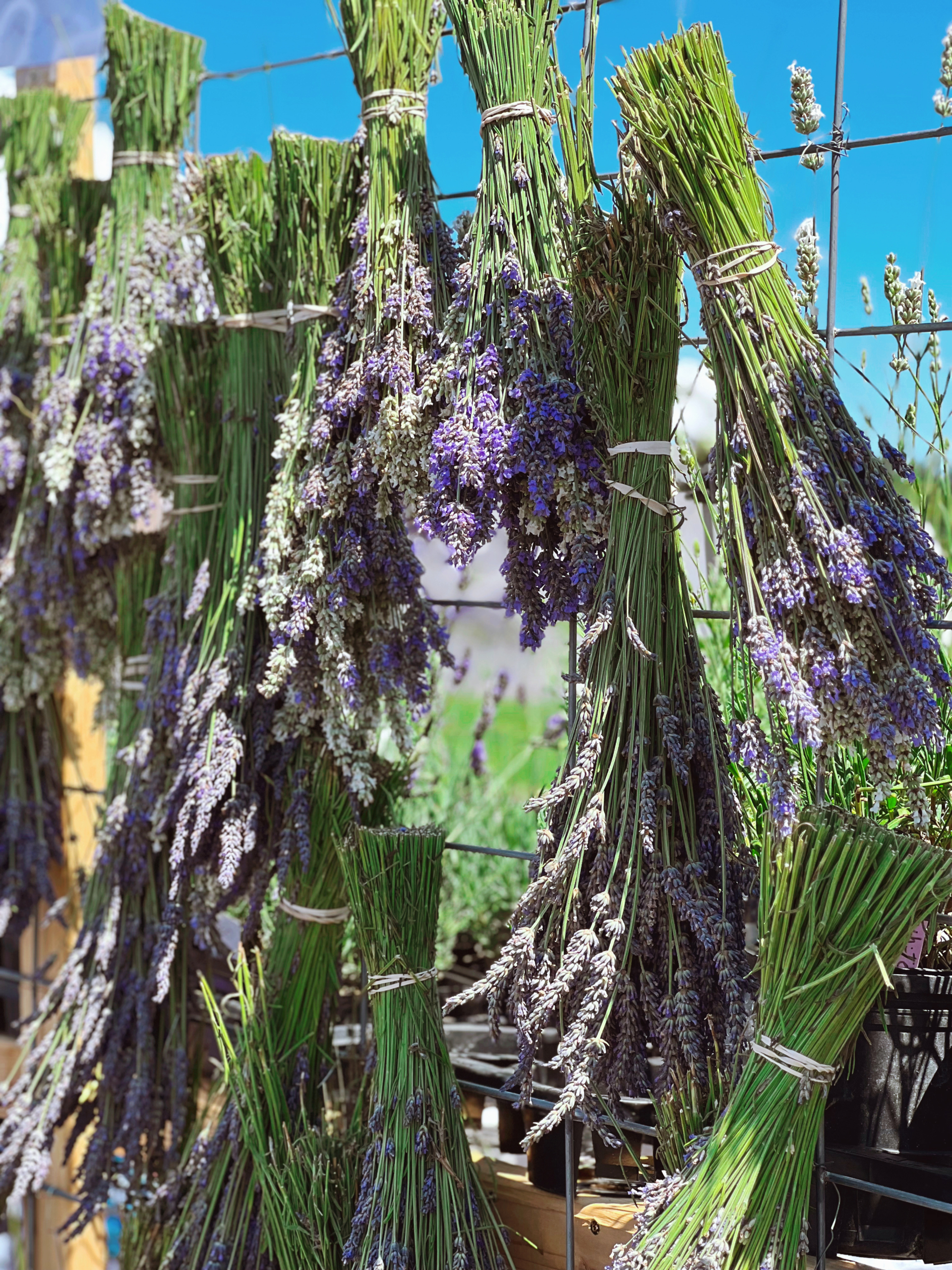
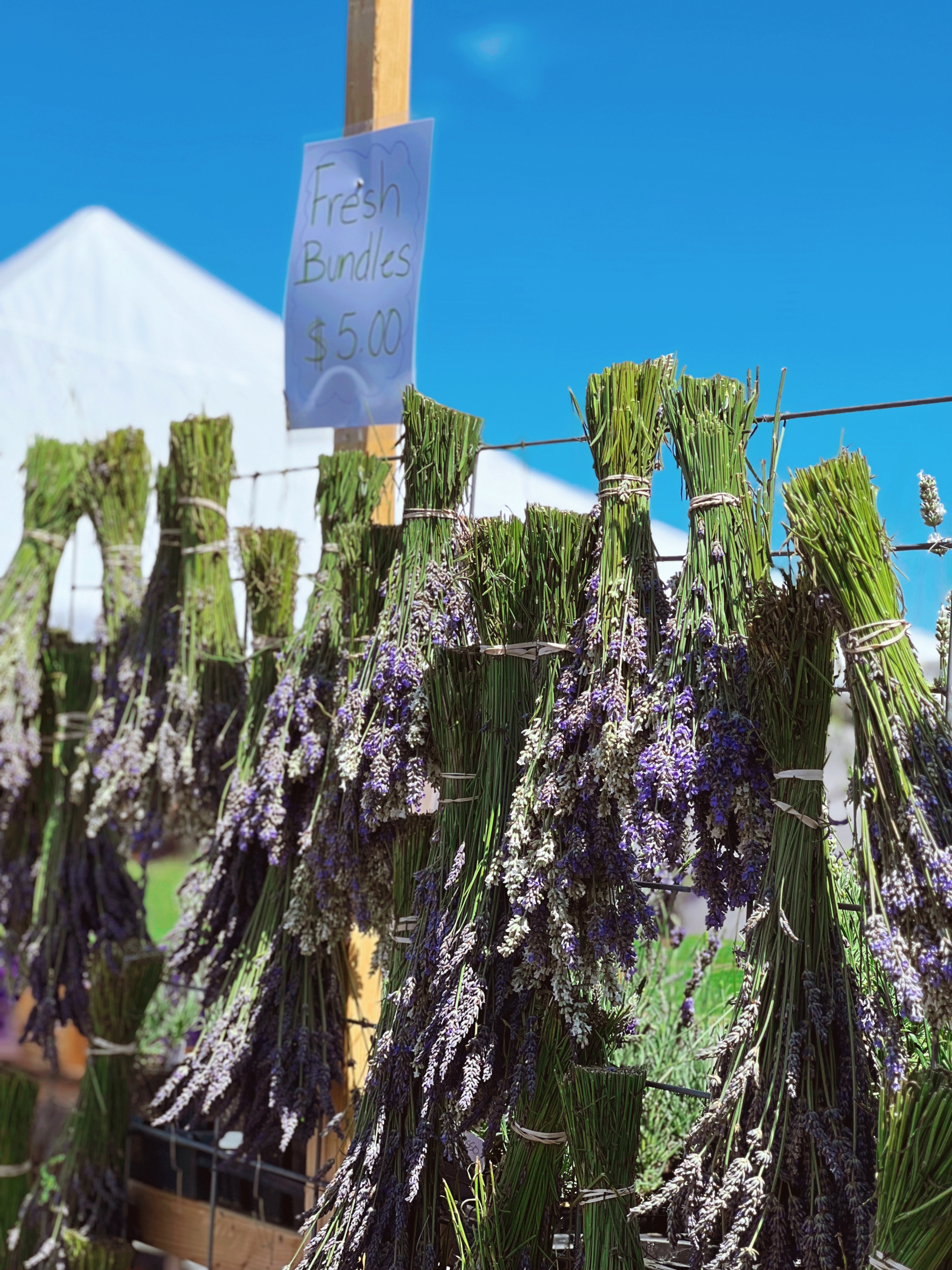
There is also that delightful three-day festival that I mentioned earlier, with live music, delicious food, scrumptious lavender deserts and lemonade, and vendors with art, jewelry, culinary treats, and bundles and wreaths of fresh lavender, of course!
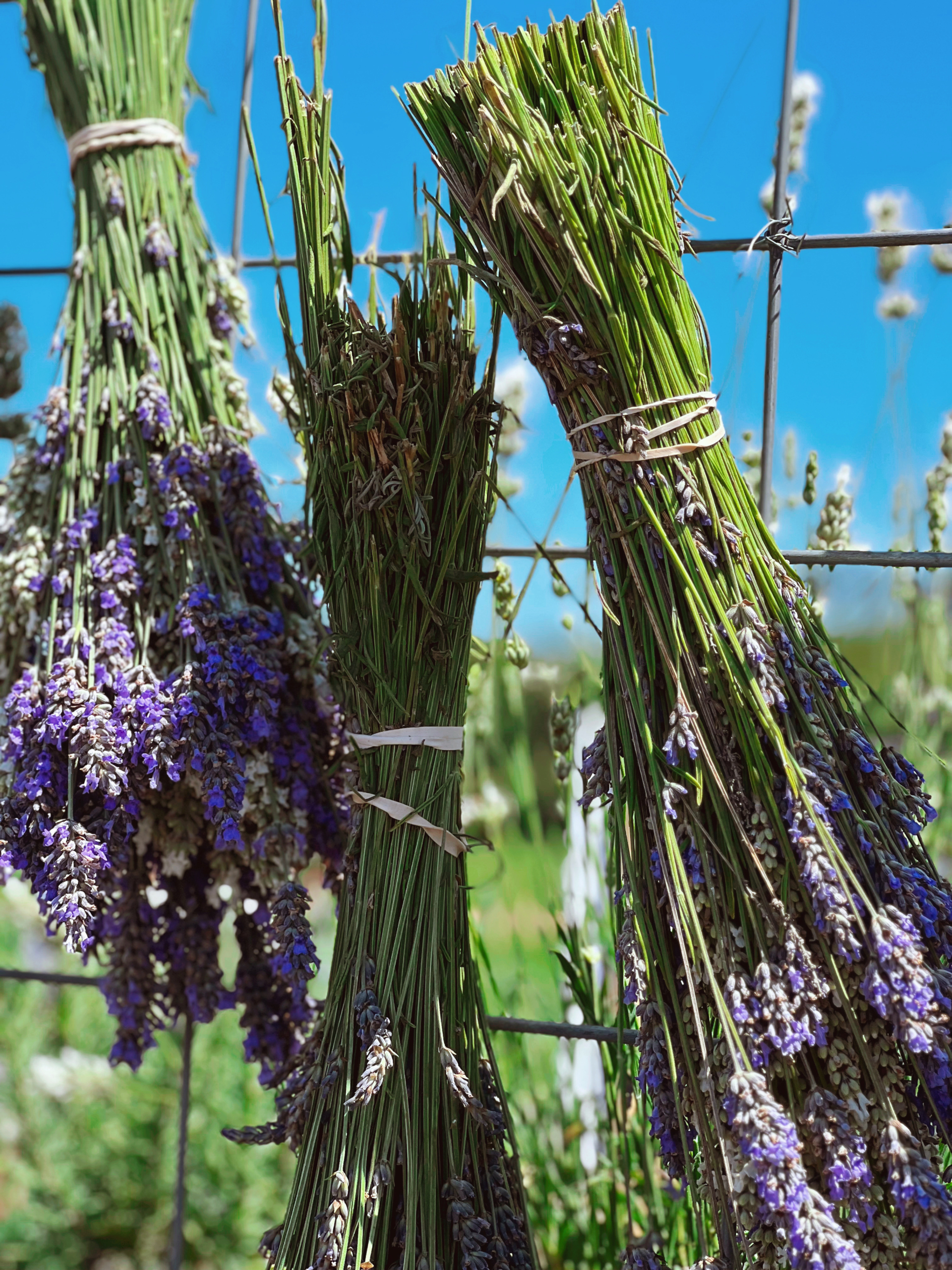
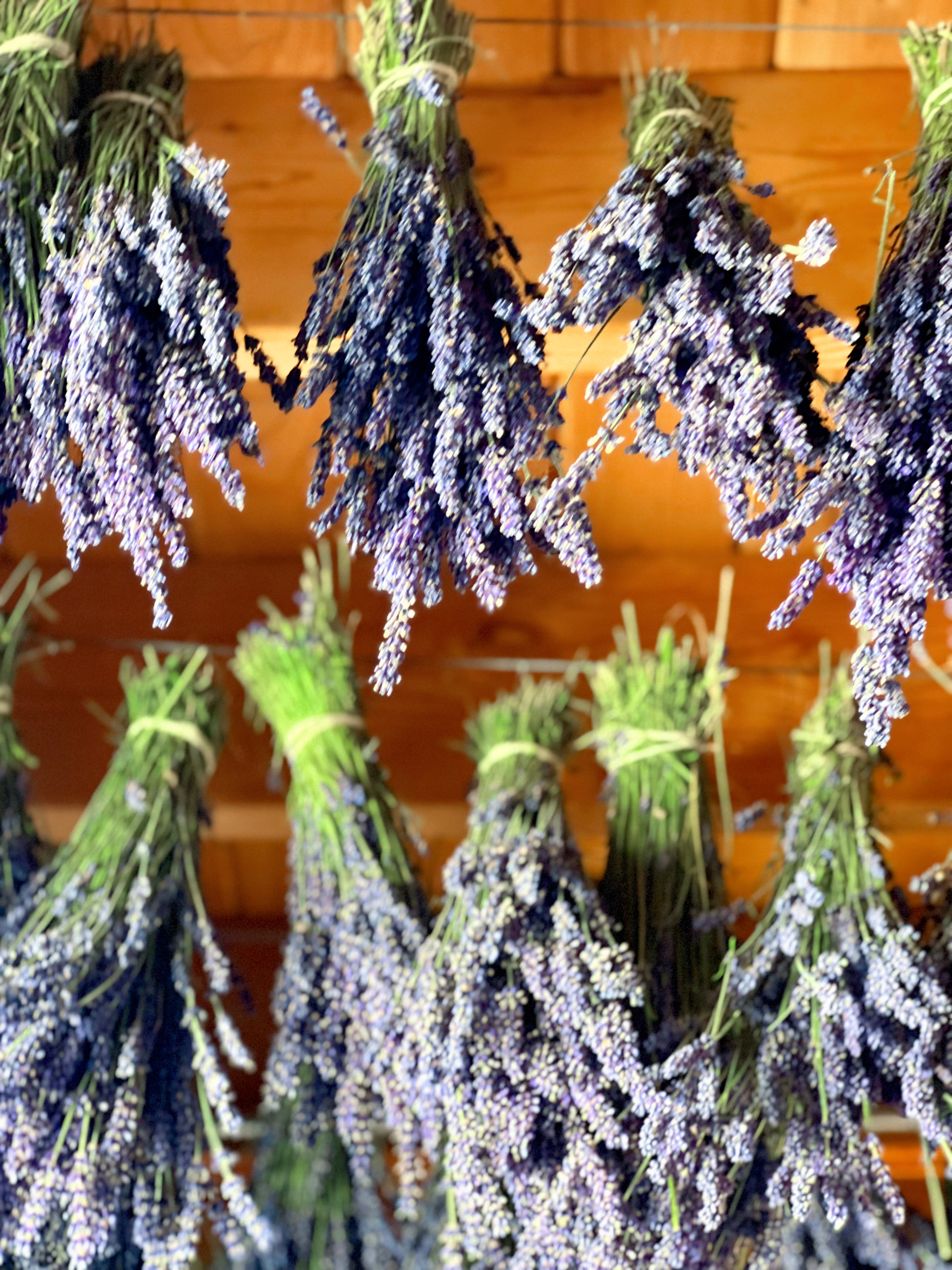
I treated myself to some sweet little lavender wands, also known as lavender bottles, a traditional flowercraft from Victorian times, and also some lavender sachets for family and friends, and fragrant bundles of fresh cut lavender.
“To make a perfume, take some rose water and wash your hands in it, then take a lavender flower and rub it with your palms, and you will achieve the desired effect.”
-Leonardo da Vinci
Lavender represents serenity, purity, and calmness.
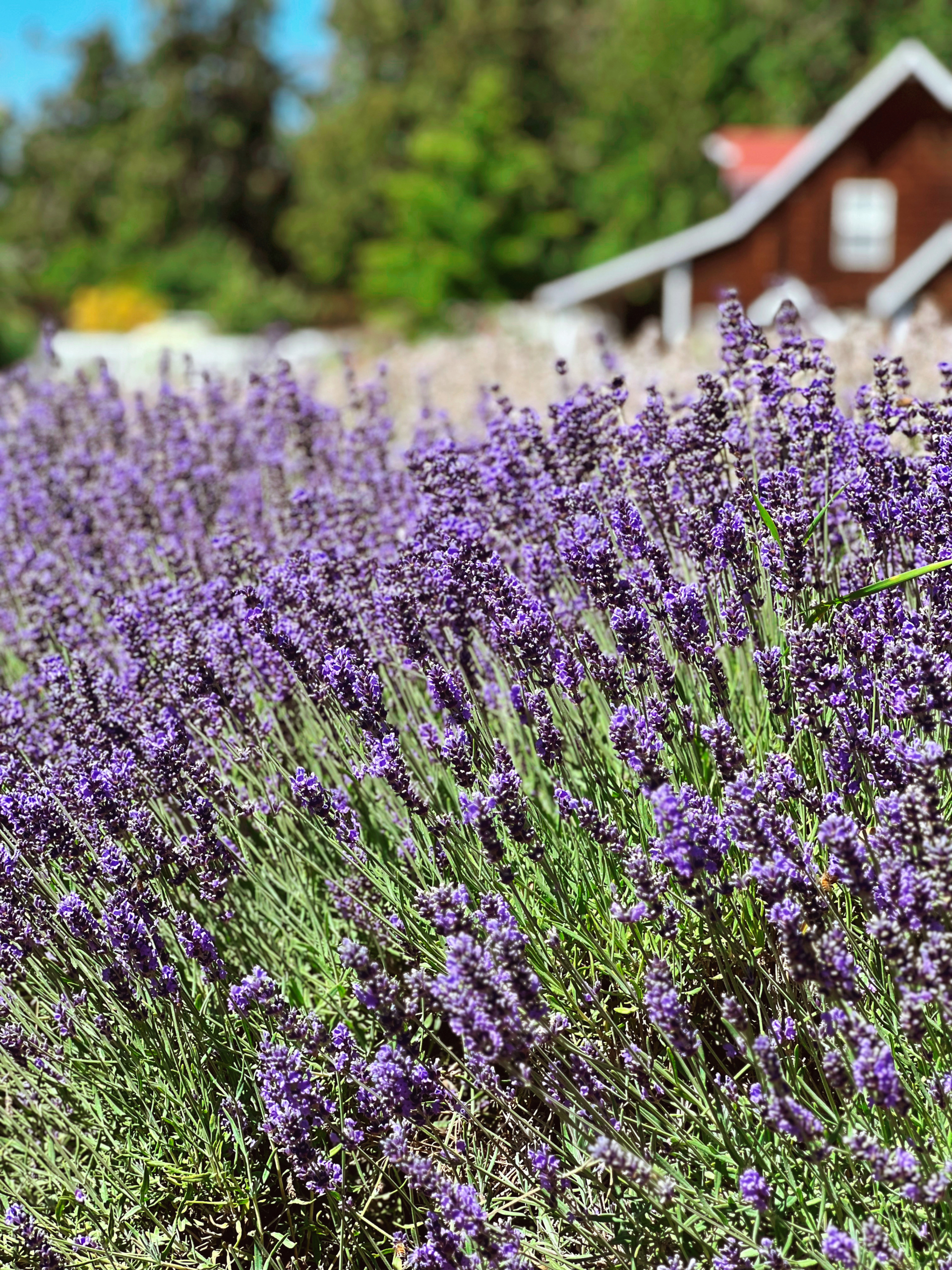
We also visited a very charming and picturesque local farm, Purple Haze Lavender Farm, where I took these photos of the fields. The beautiful farmhouses and gift shop on the property perfectly complemented the purple fields and were picturesque additions to the photos.
The gift shop was filled with lavender treasures – fresh cut bundles, lotions, soaps, candles, and honey! There was live bluegrass music and picnic tables in the shade if you wanted to take a break after strolling through the fields.
Lavender originated in the Mediterranean region, northeast Africa, and southwestern Asia, where it has grown for over 2,000 years.
There are over 45 species of lavender and more than 450 different varieties.
And, of course, where there is lavender, there are also hundreds of buzzing bees, honey and Bumble, and I will soon (in the next few weeks) be doing an entire post on these important little pollinators, so be sure to stay tuned for that! You can also sign up for my newsletter to be sure you don’t miss out!
http://gracerajendran.com/wp-content/uploads/2017/09/GraceLogo2.jpg00Gracehttp://gracerajendran.com/wp-content/uploads/2017/09/GraceLogo2.jpgGrace2023-07-23 19:43:302023-07-23 19:43:36Lavender Fields Forever: A trip to the Sequim Lavender Festival
“Painting is poetry that is seen rather than felt, and poetry is painting that is felt rather than seen.”
-Leonardo da Vinci
July is World Watercolor Month and over on Instagram, I’m creating a painting (almost) every day to celebrate! I’ll upload them once a week onto this website, but if you’re on Instagram, be sure to follow along my progress there in real time! And definitely check out the official World Watercolor Month account on Instagram as well.
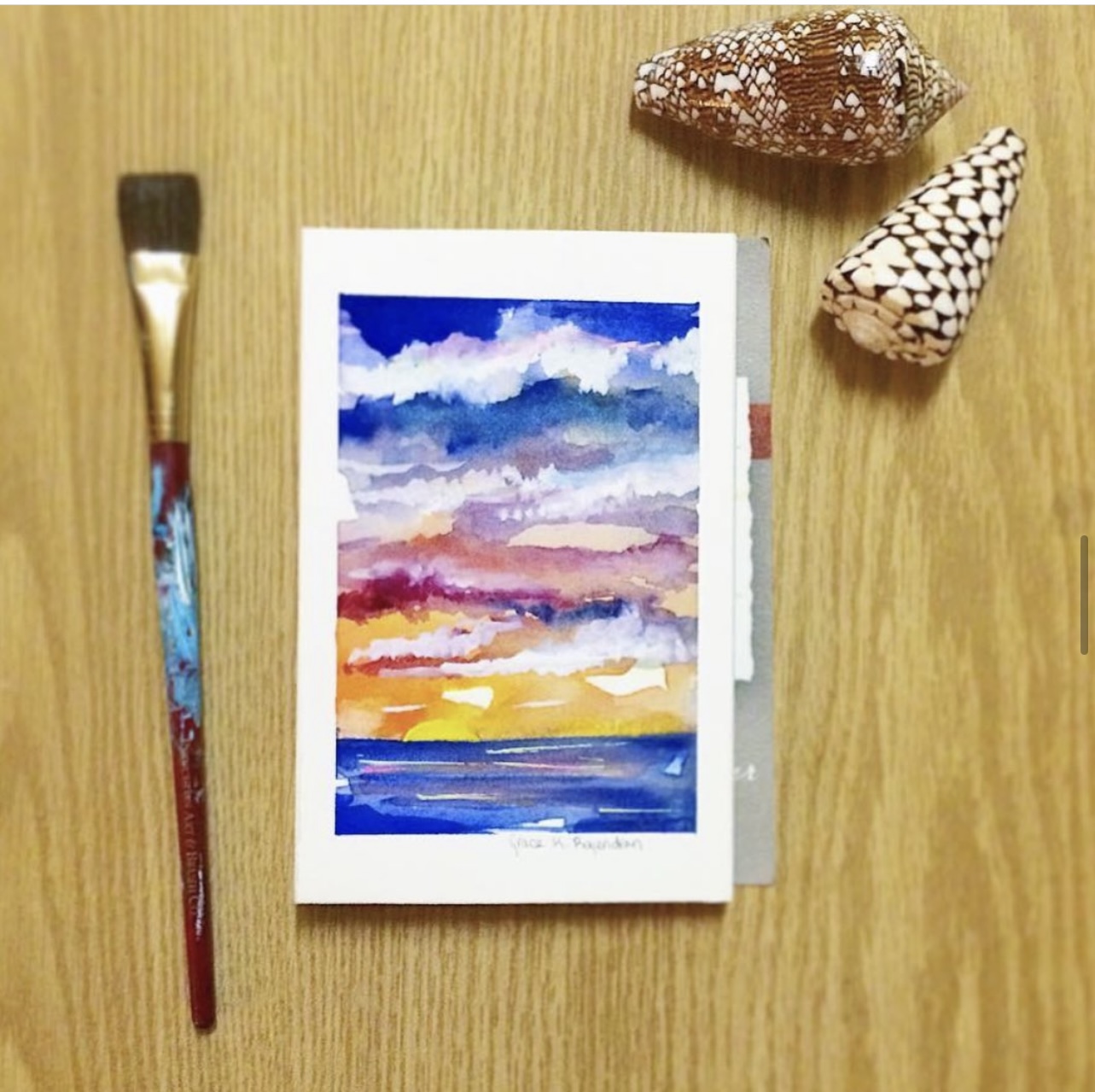
Watercolor is my first love when it comes to art! It’s how I found my voice and confidence as an artist and what I used to create the first of my pieces that were accepted in a show. I am fond of creating in many different types of art media but to this day I still think of myself as a watercolorist first.
I love painting skies in watercolor and couldn’t resist creating the above homage to sunsets in the Caribbean, where I grew up. Every night, the skies and the ocean would shine like liquid gold. The ocean is what I miss most from my childhood. I live on the coast now too and it’s wonderful -I actually wouldn’t want to be anywhere else right now. However, somehow, the ocean is not quite the same.
It’s beautiful here where I live now, but in a colder, starker, greyer way – which I am also incredibly drawn to – but every now and then, you miss warm sand between your toes, soft like silk; and so much blue that your heart can’t help but be happy. The thing with the tropics is that everything has an intensity of 10 : colors, scents, tastes! The sea is turquoise, the flowers are heady, the fruits taste like the sun.
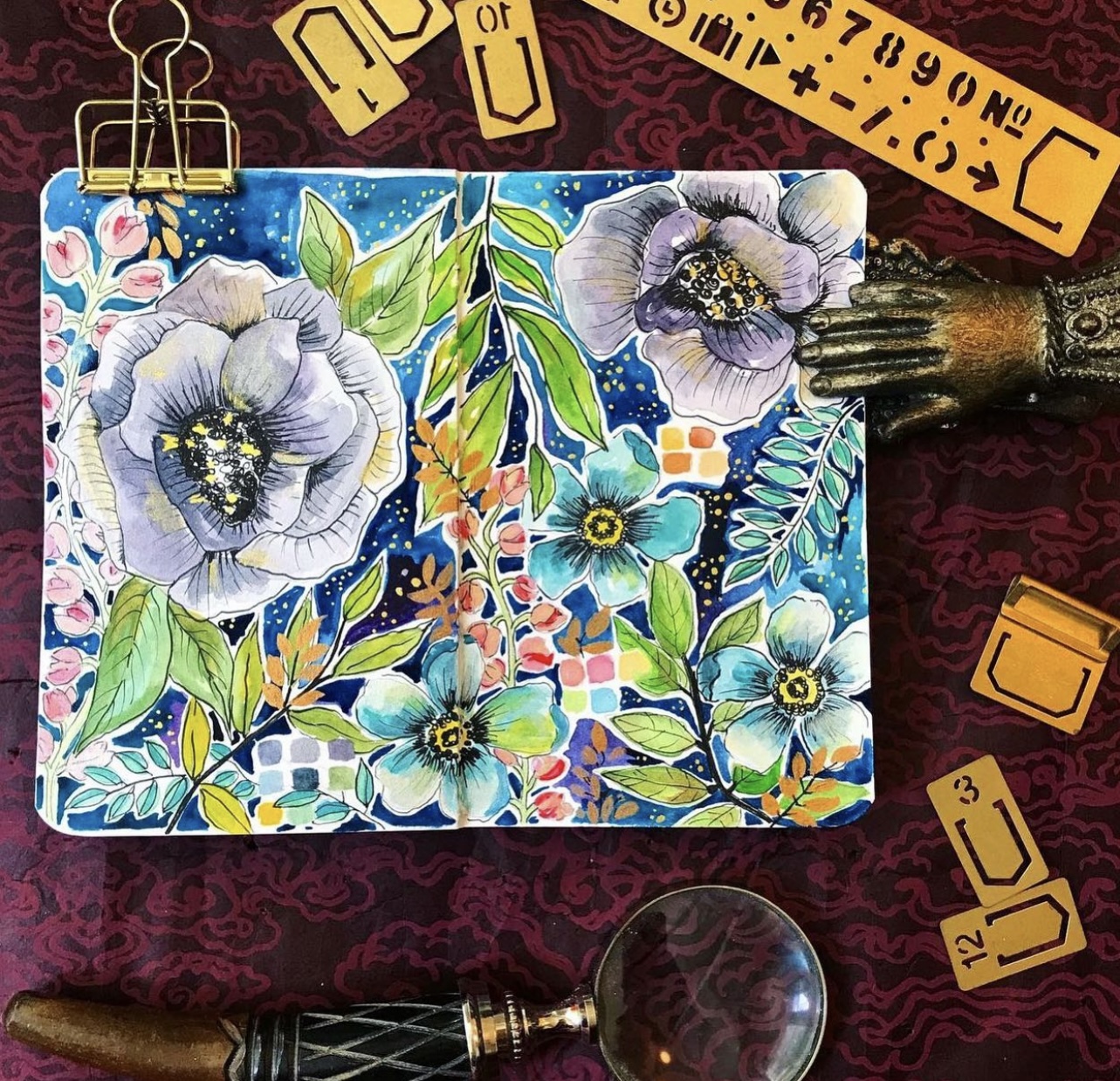
Speaking of tropical flowers….
“…and then, I have nature and art and poetry, and if that is not enough, what is enough?”
-Vincent Van Gogh
“…every night come out these envoys of beauty, and light the universe with their admonishing smile.”
-Ralph Waldo Emerson
Emerson was talking about the stars, but I think the quote fits this painting strikingly well!
“Ocean is more ancient than the mountains, and freighted with the memories and the dreams of Time.” – H.P. Lovecraft
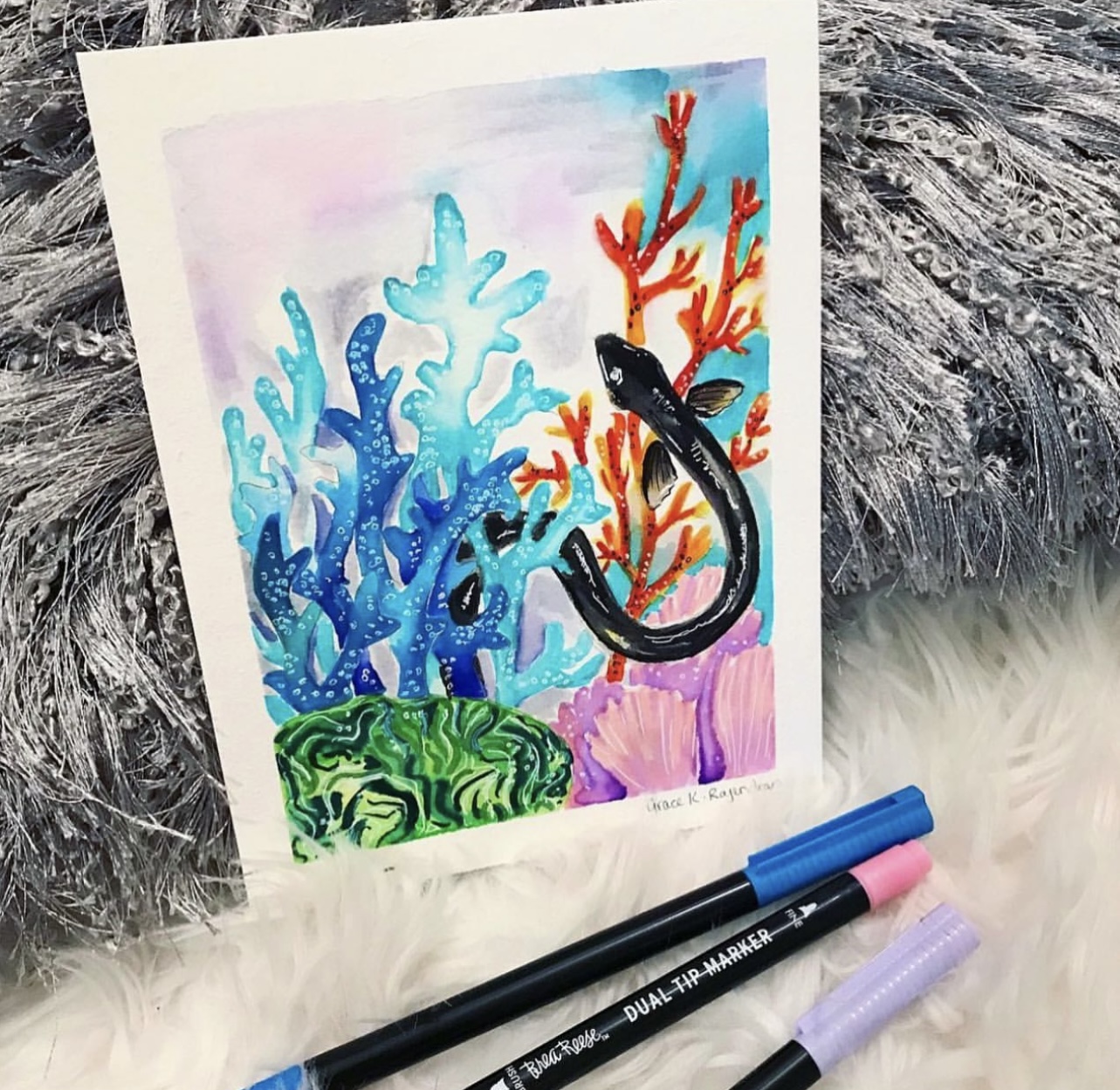
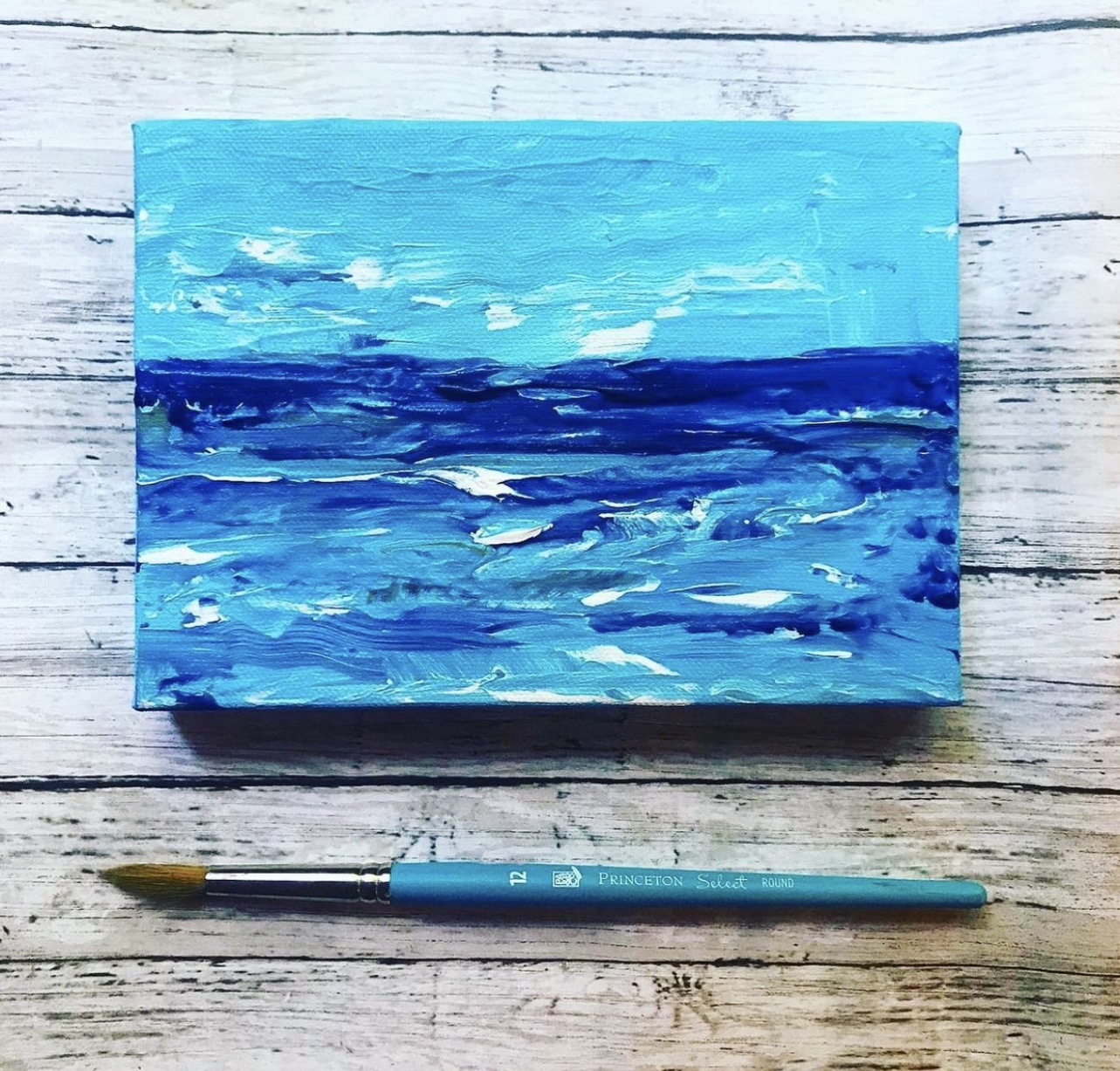
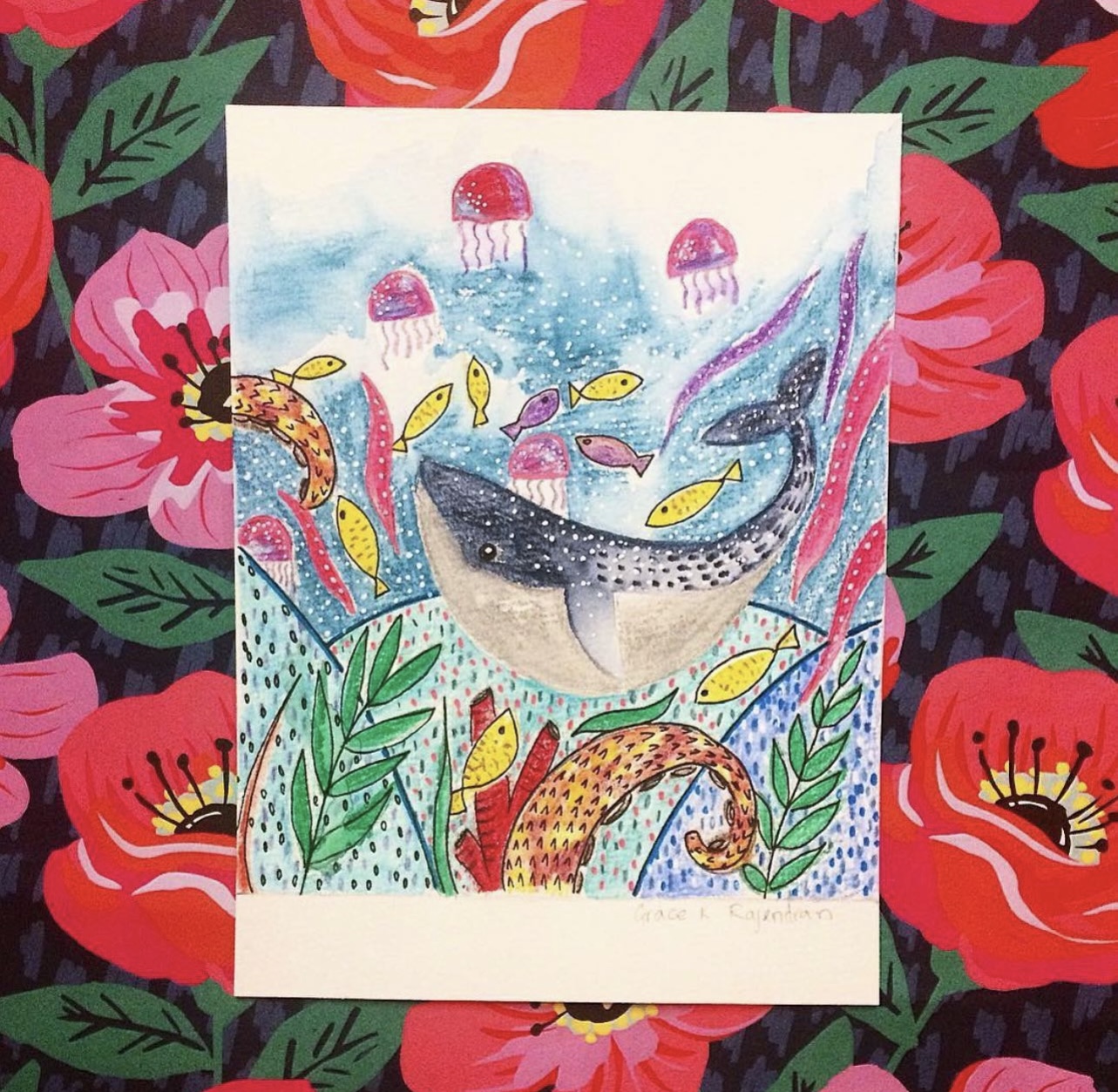
Throughout June, I participated in the FOR PLANET OCEAN art challenge on Instagram. Be sure to check out the @ForPlanetOcean account to learn more about this challenge and its organizers.
There were five prompts:
Coral Reefs
Blue Mind
Artivism: Protect What You Love
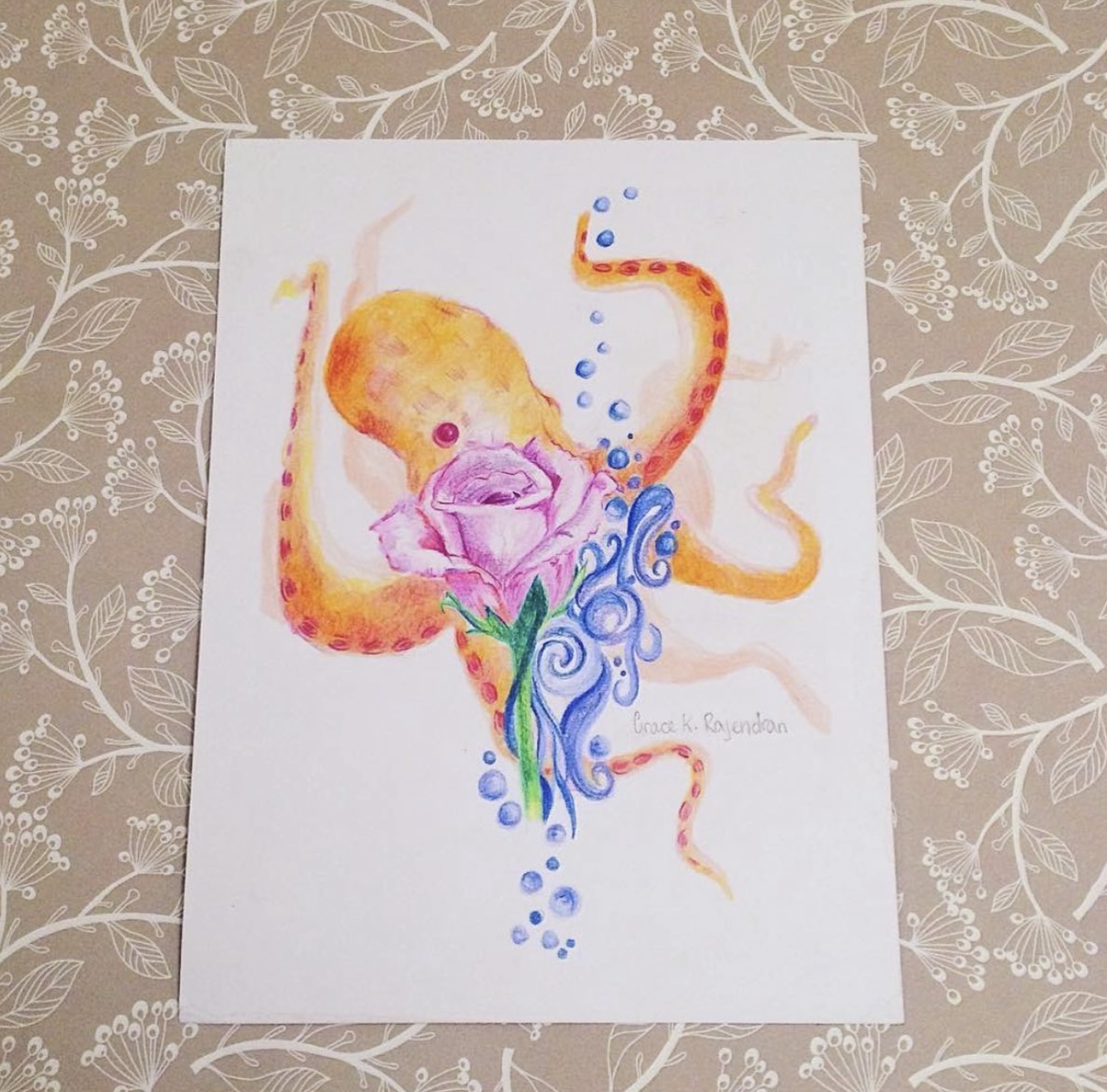
Deep Sea: Mysterious Depths
Seagrass: Planting A Future
Having grown up on an island, I love the ocean and feel most completely at peace when I am standing on the shore, looking out at the waves and the endless blue. I always welcome any opportunity to observe the ocean and its creatures and to try and capture some of their awe-inspiring beauty and mystery in my art.
Coral Reefs
“I can mention many moments that were unforgettable and revelatory. But the most single revelatory three minutes was the first time I put on scuba gear and dived on a coral reef. It’s just the unbelievable fact that you can move in three dimensions.”
– David Attenborough
Coral reefs are stunning underwater ecosystems that rival rainforests in their biodiversity! Sadly, our coral reefs are threatened by pollution, climate change, and irresponsible fishing practices and some of them have already been completely destroyed. Not only are they incredibly beautiful to look at but they support the lives of many, many marine creatures – so we definitely need to step up and consider how our actions impact them.
Blue Mind
“Water quiets all the noise, all the distractions, and connects you to your own thoughts.”
-Wallace J. Nichols, from Blue Mind
Artivism: Protect What You Love
“The sea, the great unifier, is man’s only hope. Now, as never before, the old phrase has a literal meaning: we are all in the same boat.”
-Jacques Cousteau
Art can help raise awareness for causes and influence change. Nature Art can inspire people to learn more about the natural world around them and find ways to get involved with conservation.
In this piece I wanted to illustrate the beauty and biodiversity of the flora and fauna that can be found in our oceans. We still haven’t explored all of the mysteries that the waters hold but we are causing them a great deal of strain with over-fishing, pollution, and the effects of climate change to name a few.
Oceans regulate the Earth’s temperature and generate most of the oxygen that we breathe. Marine ecosystems, such as mangroves and seagrasses help store a lot of carbon emissions, and so are a vital part of the fight against climate change.
Deep sea habitats are incredibly biodiverse and have up to (and maybe more than) 10 million species! And the vast majority of the ocean has yet to be explored still! I don’t want to go into all of the ways in which the ocean’s flora and fauna benefit humans – because I don’t think that’s the point. Instead, we need to remember that our actions directly impact the lives of these precious creatures, so we need to do our best to care for them.
Deep Sea: Mysterious Depths
“Although we couldn’t have been more different — I, a terrestrial vertebrate constrained by joints and bound to air; she, a marine mollusk with not a single bone, who breathed water — she was clearly as curious about me as I was about her.”
-Sy Montgomery, TheSoul of An Octopus
The fourth prompt of @ForPlanetOcean was Deep Sea: Mysterious Depths and I decided to do a surreal colored pencil drawing of an octopus – because they are beautiful, mysterious, intelligent (classified as the most intelligent invertebrate), recognize people they commonly see, playful, can use tools, open jars of food, and solve puzzles… so many cool facts!!
Also, the giant Pacific octopus (Enteroctopus dofleini) can be found off the coast of Washington State, where I live, so I want to give them some art-y love!
This is the largest octopus species, with a record of a 71-kilogram (157-pound) one weighed live.
While it can be found to ocean depths of about 4,920 feet (1500 m), it is mostly found in shallow waters to 16 feet (5 m) deep.
Seagrass: Planting A future
“The sea, once it casts its spell, holds one in its net of wonder forever.”
— Jacques Cousteau
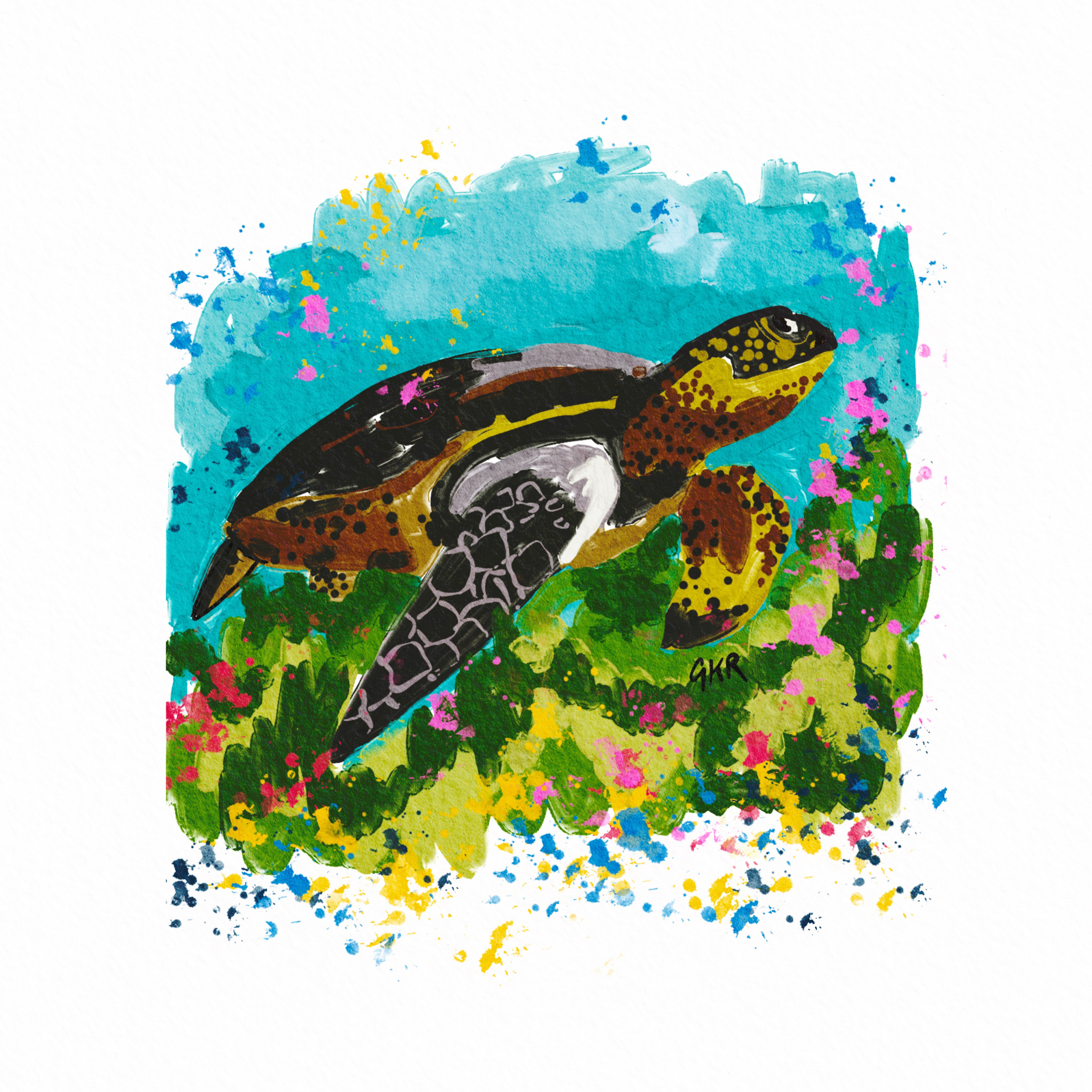
I adore turtles so I had to include one in this painting!
Seagrasses are the only flowering plants that grow underwater in marine environments. They got the name because of the long, blade-like appearance of many of the different species in the group.
Seagrasses spread along long stretches to look like terrestrial grasslands and they contain an incredible range of biodiversity! For example, they provide a nursery for baby turtles of all species as well as food for all ages of green turtles… which is how Green Turtles also get their green color!!
Unfortunately a great number of seagrass species are also listed as Threatened or Near-Threatened due to a combination of factors such as storms, disease, pollution, and human activity along the coast, such as motorboats, fishing, and development.
This art challenge has been in support of Project Seagrass, an organization working towards the protection of seagrass meadows. Be sure to check them out for more information and ways to help.
http://gracerajendran.com/wp-content/uploads/2017/09/GraceLogo2.jpg00Gracehttp://gracerajendran.com/wp-content/uploads/2017/09/GraceLogo2.jpgGrace2023-07-16 14:49:152023-07-16 14:49:25Diving Into The Ocean: An Art Challenge