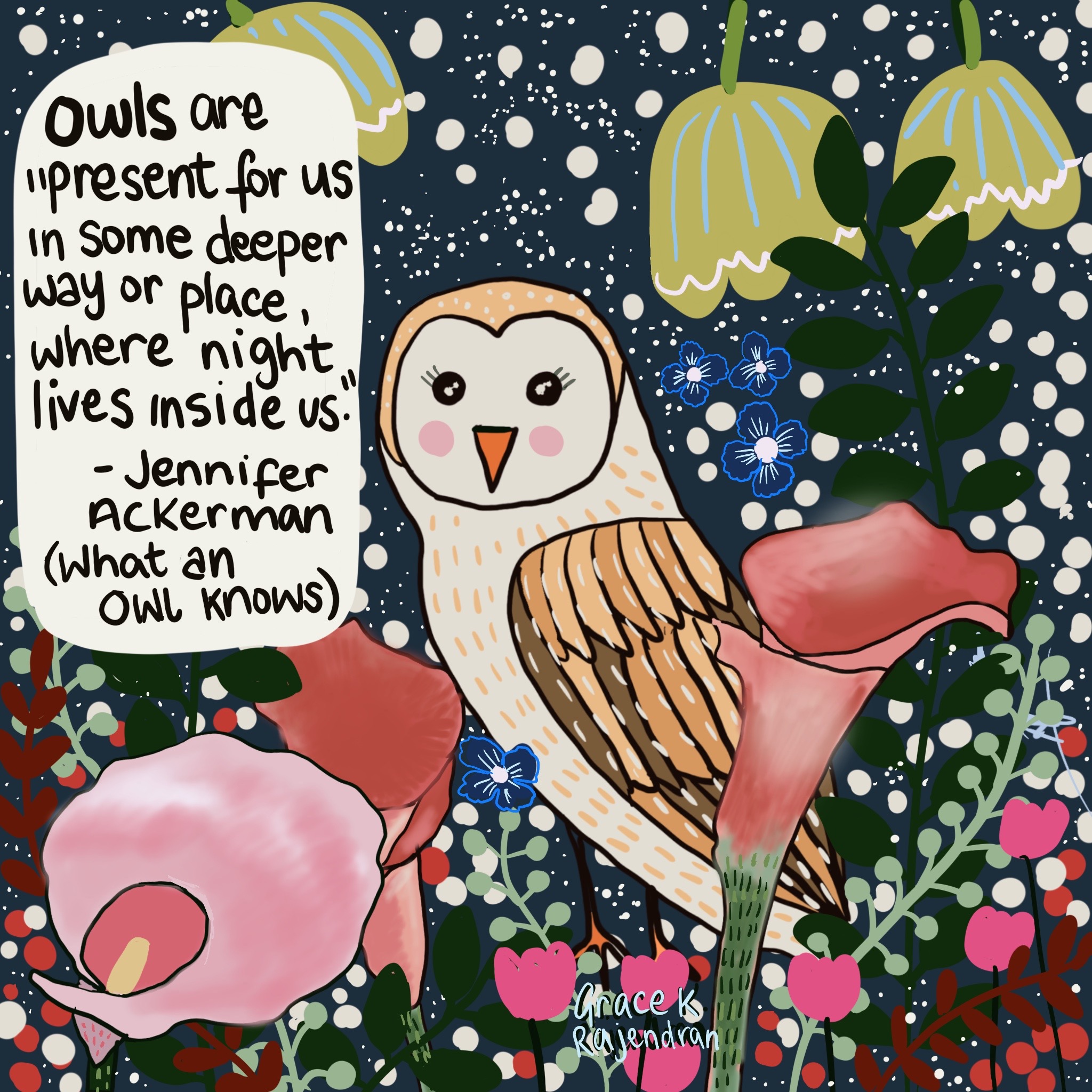
While “owls are not omnipresent for us in the way songbirds are, they’re present for us in some deeper way or place, where night lives inside us.”
-Jennifer Ackerman, in “What An Owl Knows”
This was one of my favorite quotes from What An Owl Knows: The New Science of The World’s Most Enigmatic Bird by Jennifer Ackerman (The Genius of Birds). If you’re intrigued by owls as well or curious to learn more about their natural history, biology, and lore, be sure to check out my Starred Review of this fascinating book in the Nature & Environment section of the July 7th issue of Shelf Awareness (CLICK HERE).

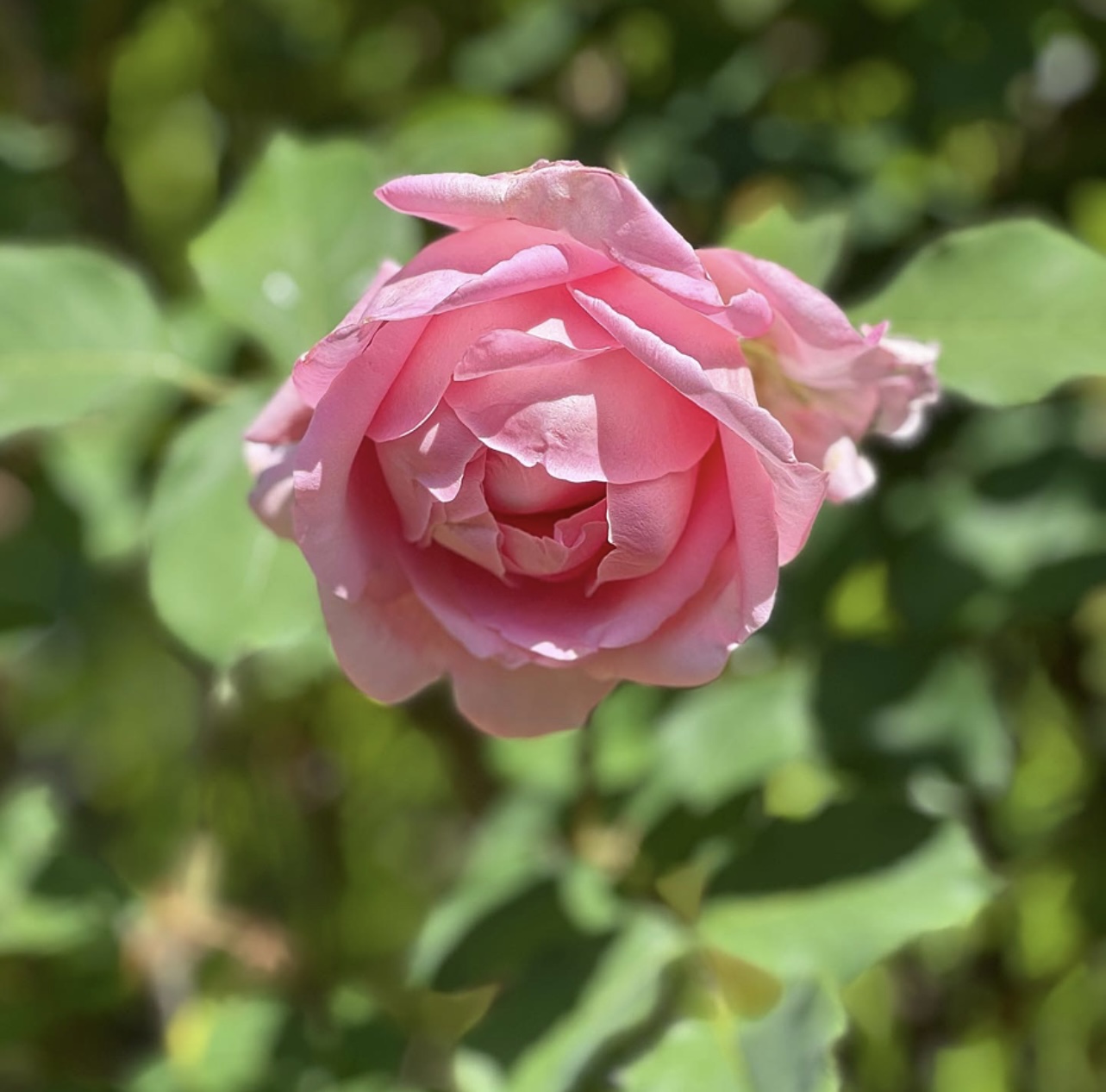
June was National Rose Month and I saw SO many beautiful roses! My parents’ rose garden was in all of its magnificent glory – wild and gorgeous. My parents spend hours each day tending to their garden and it really shows! All of these blooms are from that garden.

“It was June, and the world smelled of roses. The sunshine was like powdered gold over the grassy hillside.”
-Maud Hart Lovelace
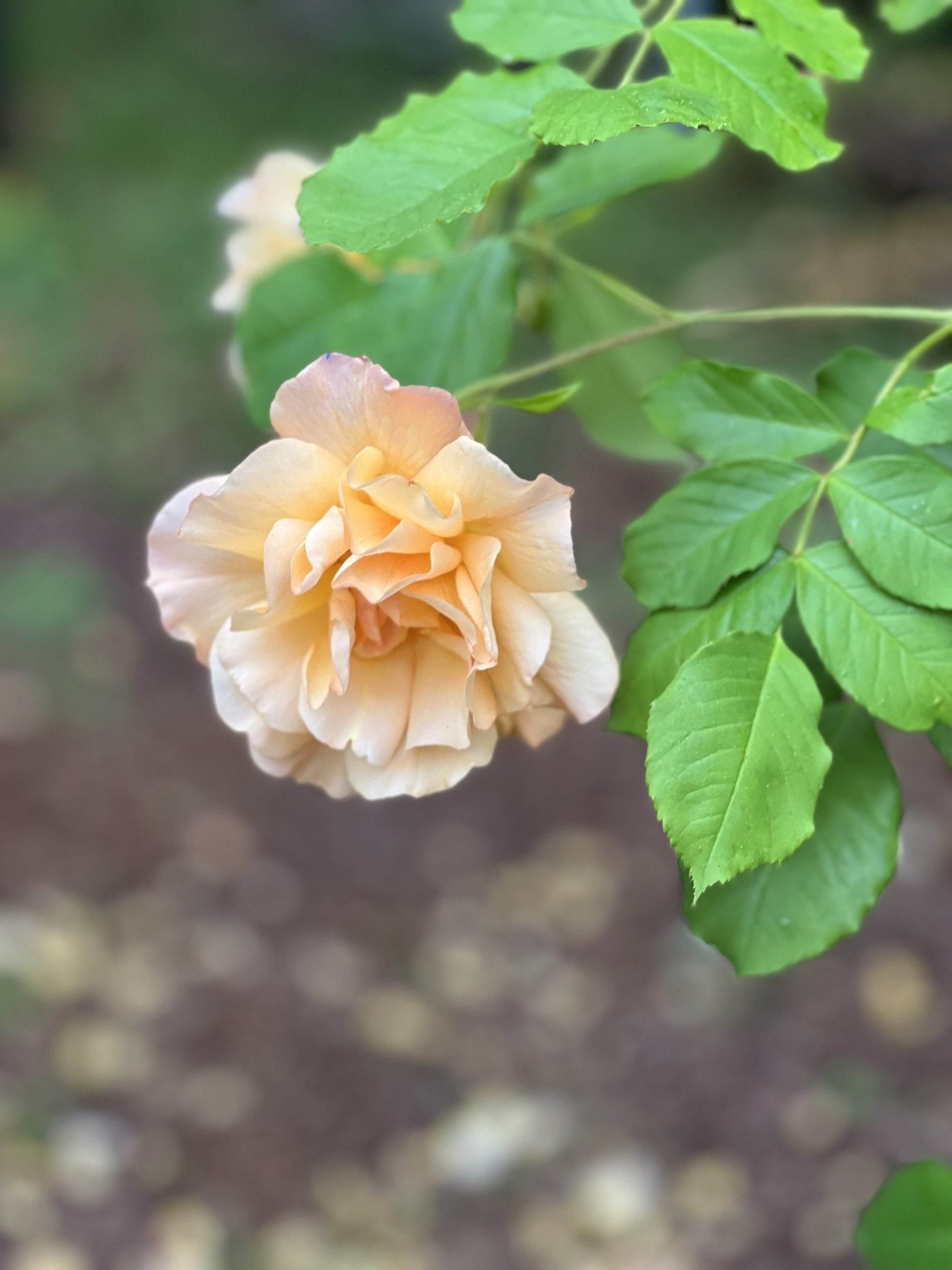
“Come out here where the roses have opened. Let soul and world meet.”
– Rumi
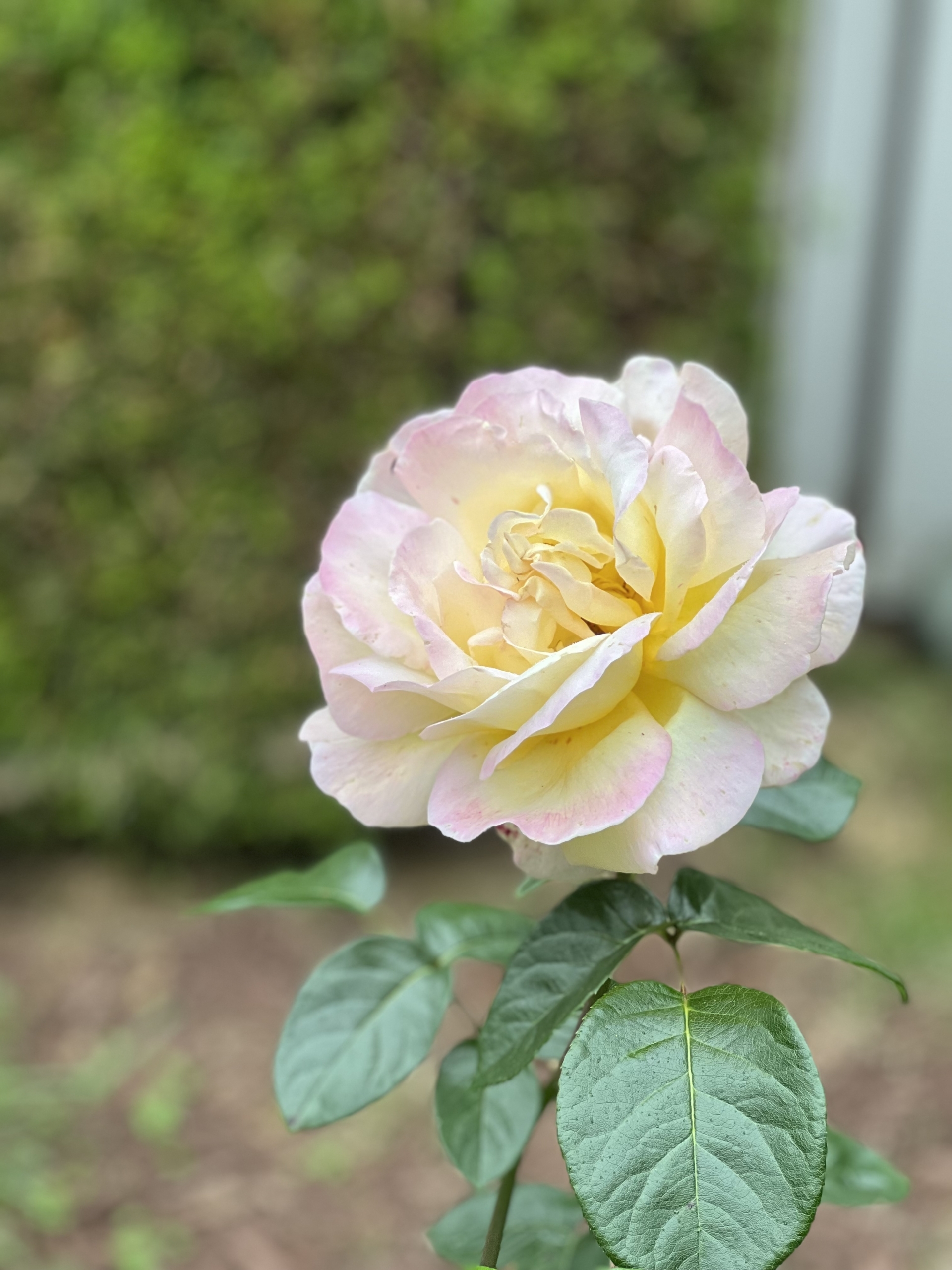
“Wild roses,” I said to them one morning.
“Do you have the answers? And if you do,
would you tell me?”-Mary Oliver, Felicity
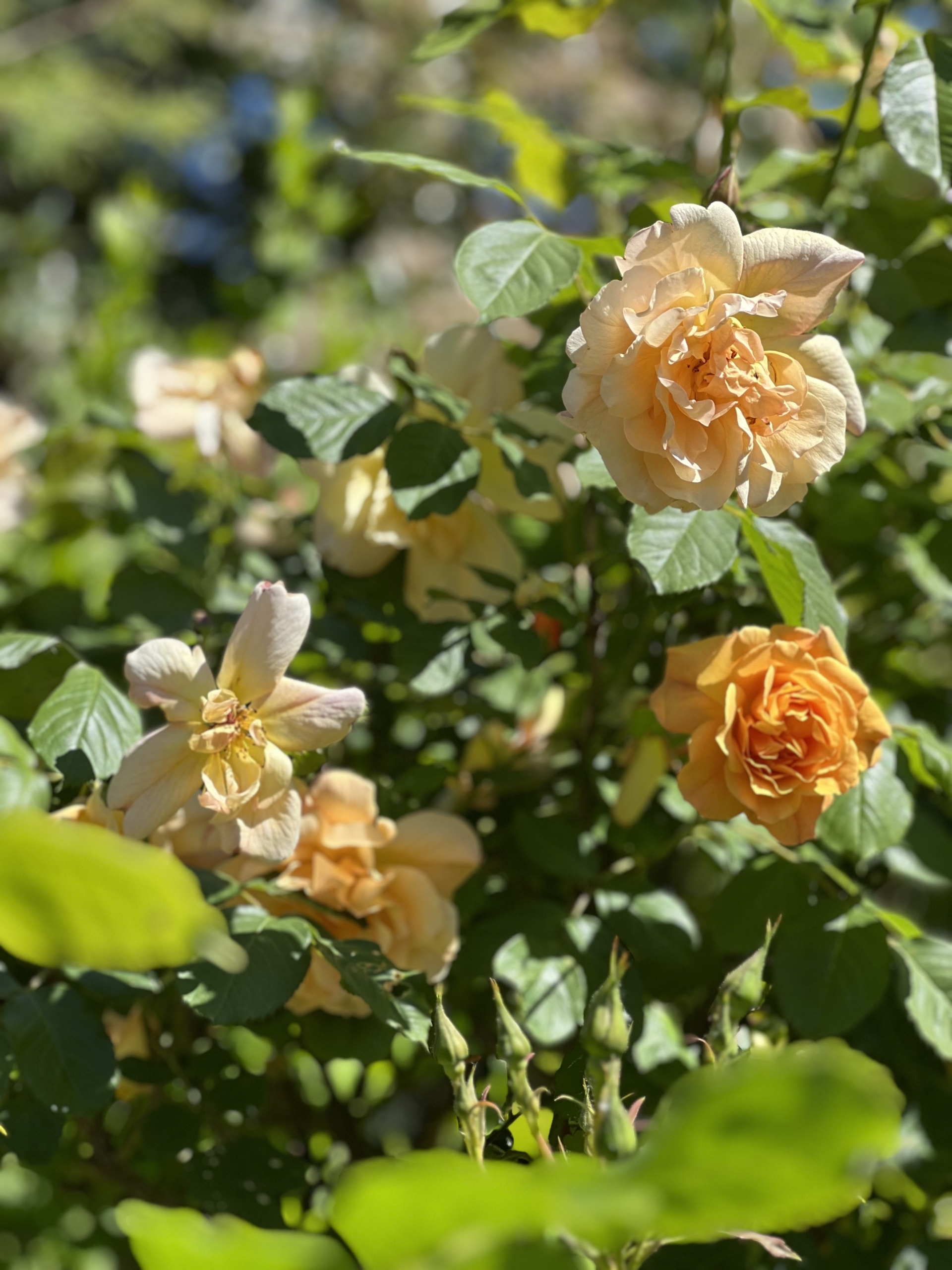
There is simply the rose; it is perfect in every moment of its existence.”
― Ralph Waldo Emerson
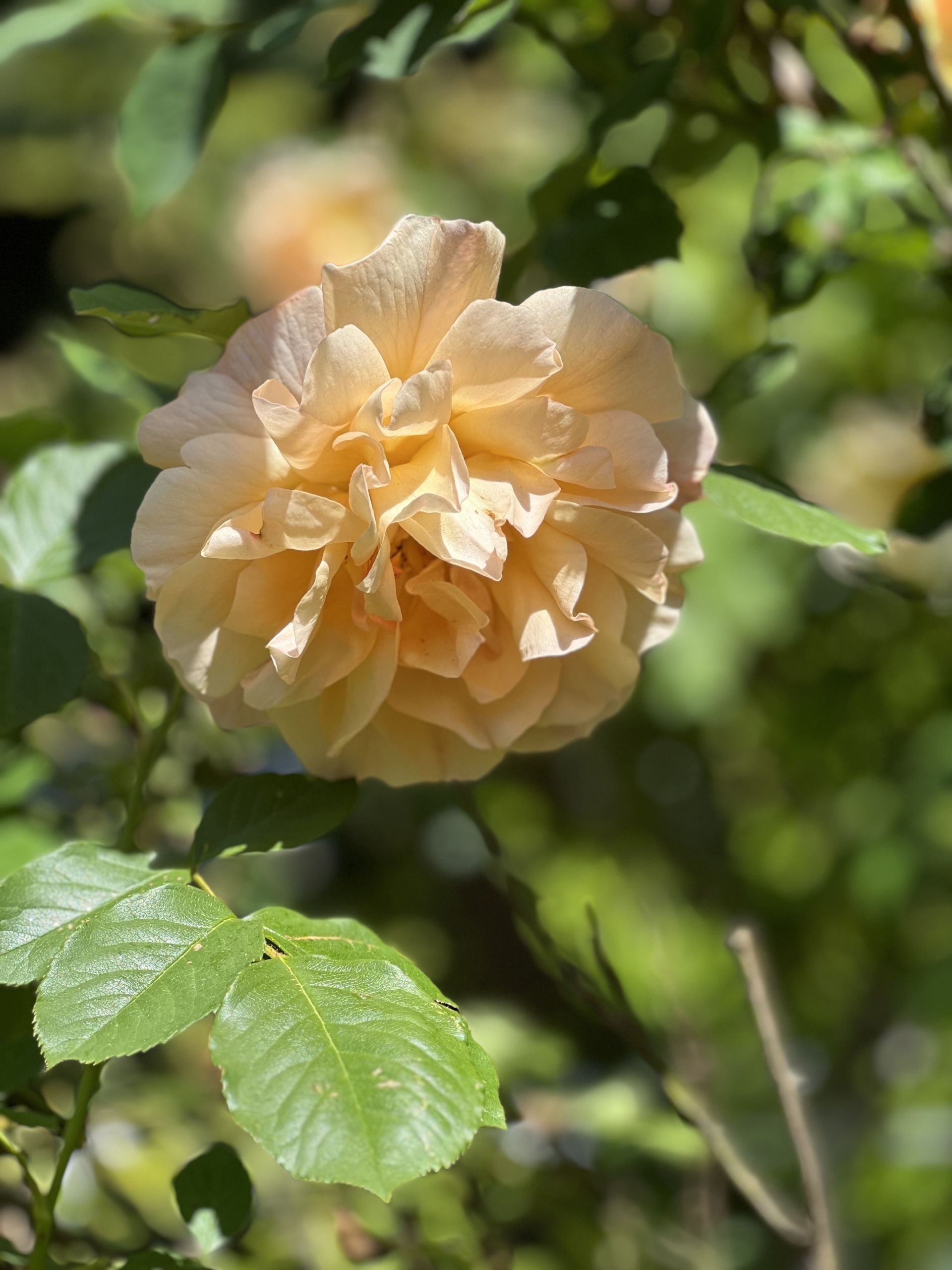
“Love is like the wild rose.”
– Emily Brontë
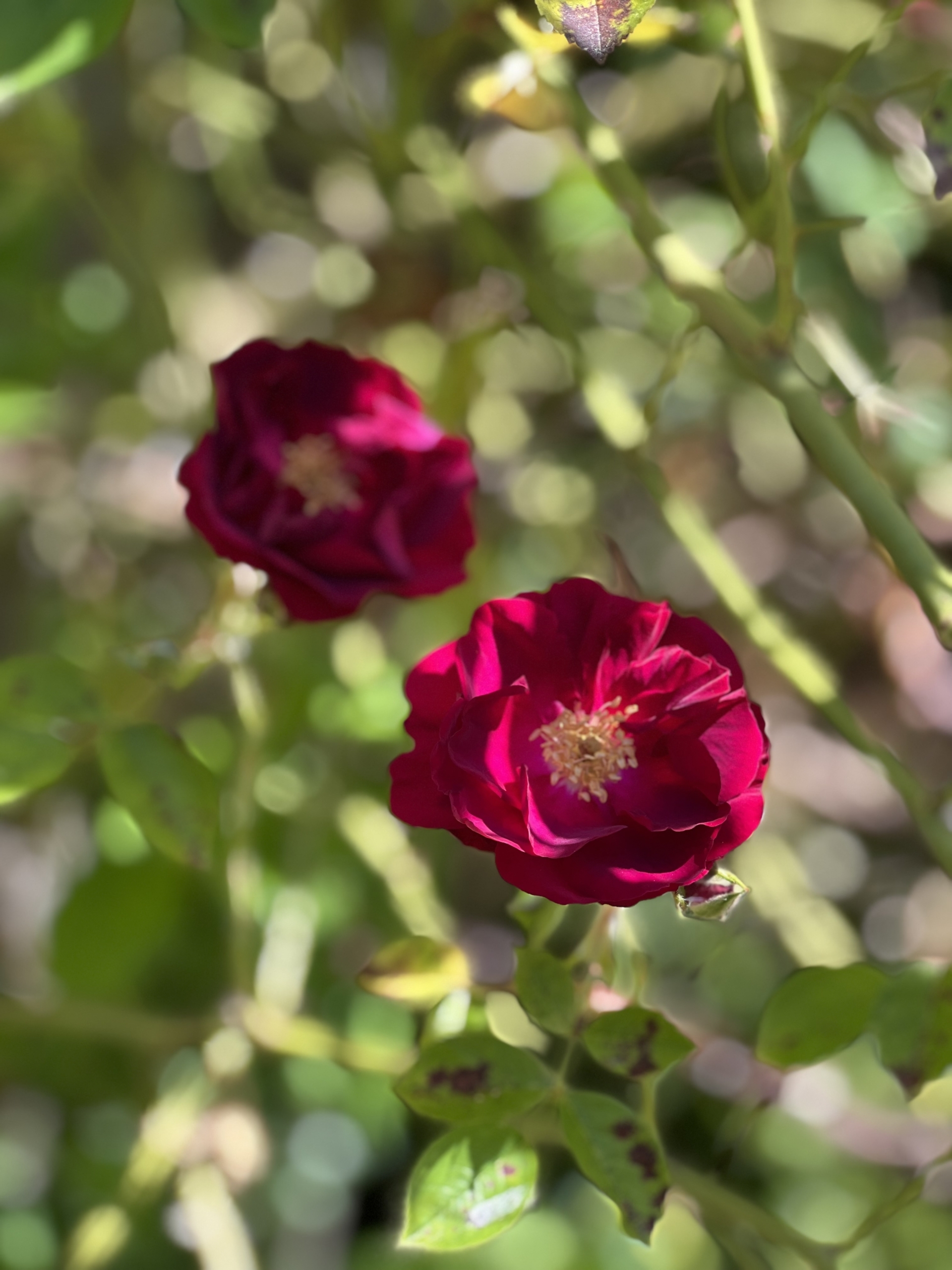
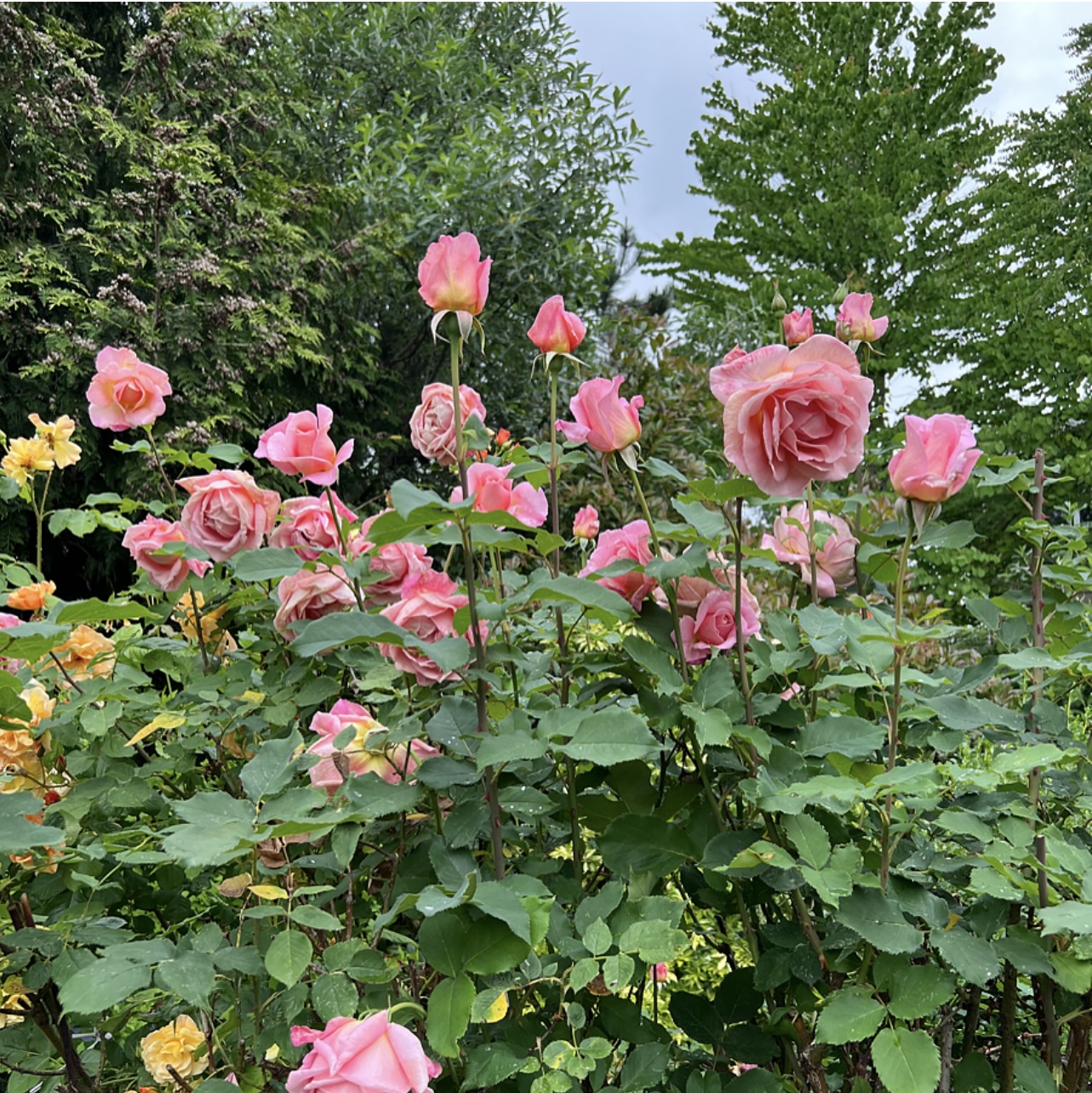
“There is nothing more difficult for a truly creative painter than to paint a rose, because before he can do so he has first to forget all the roses that were ever painted.”
– Henri Matisse
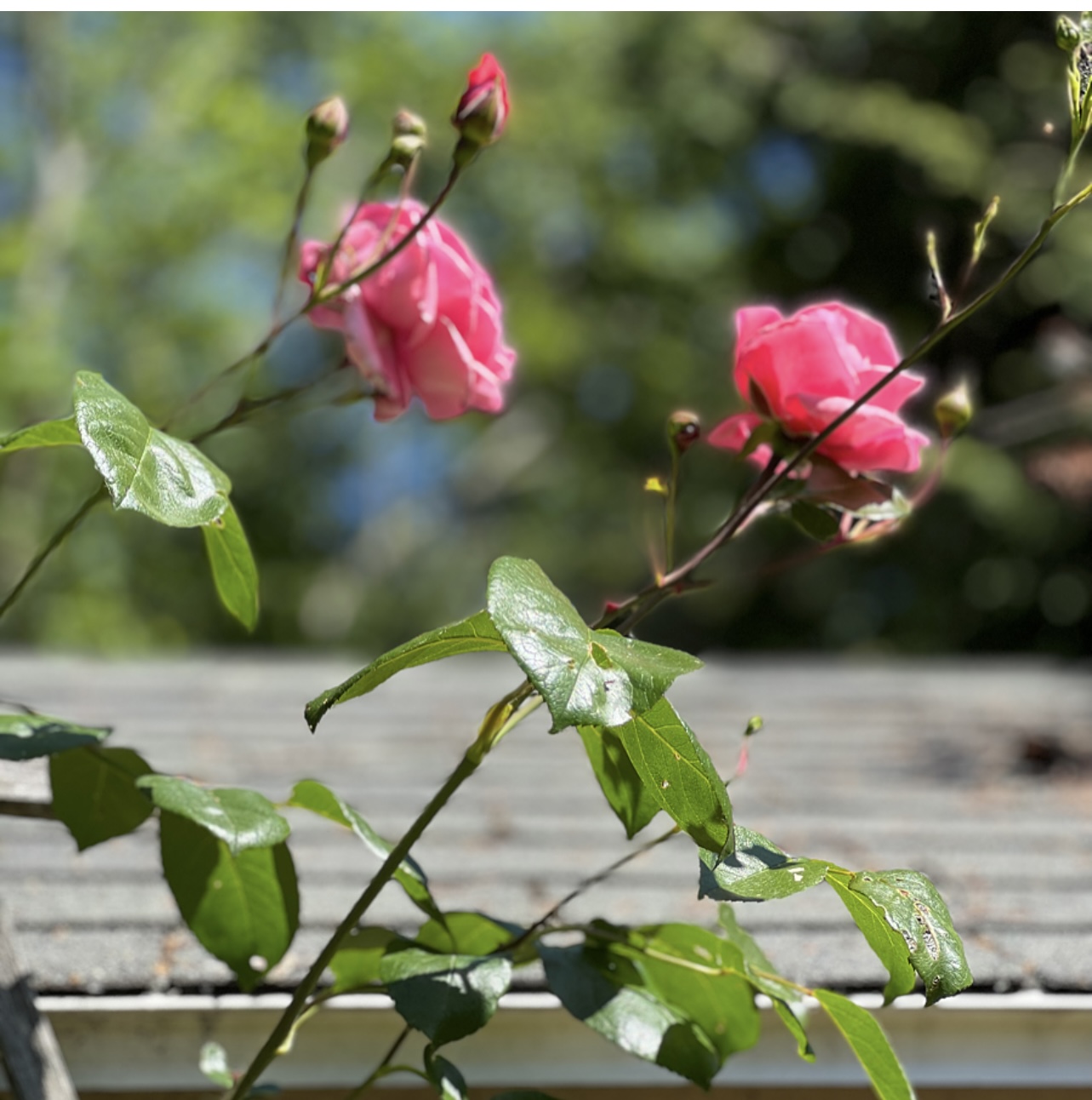
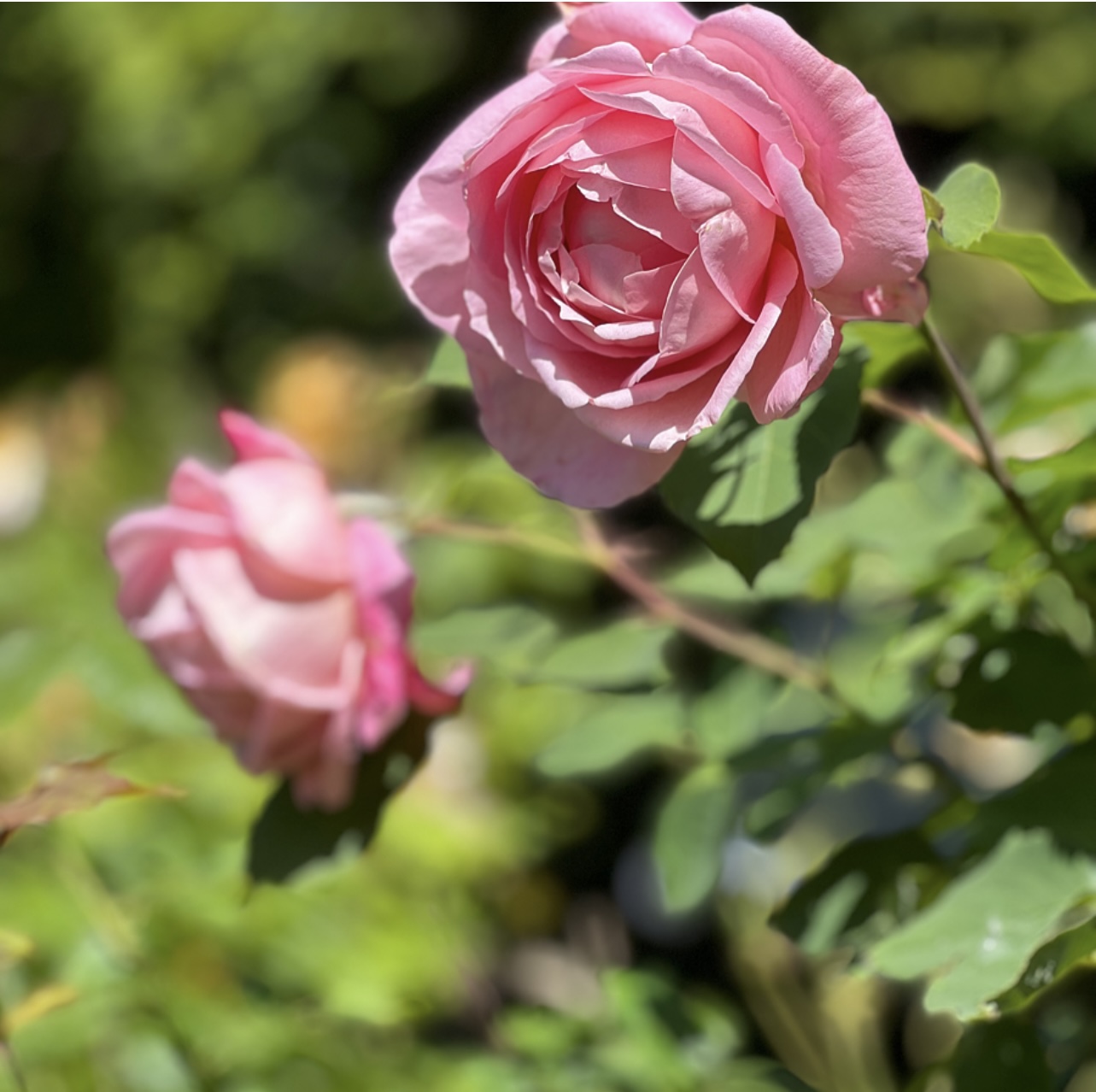
“And the roses—the roses! Rising out of the grass, tangled round the sun-dial, wreathing the tree trunks and hanging from their branches, climbing up the walls and spreading over them with long garlands falling in cascades—they came alive day by day, hour by hour.”
-Frances Hodgson Burnett
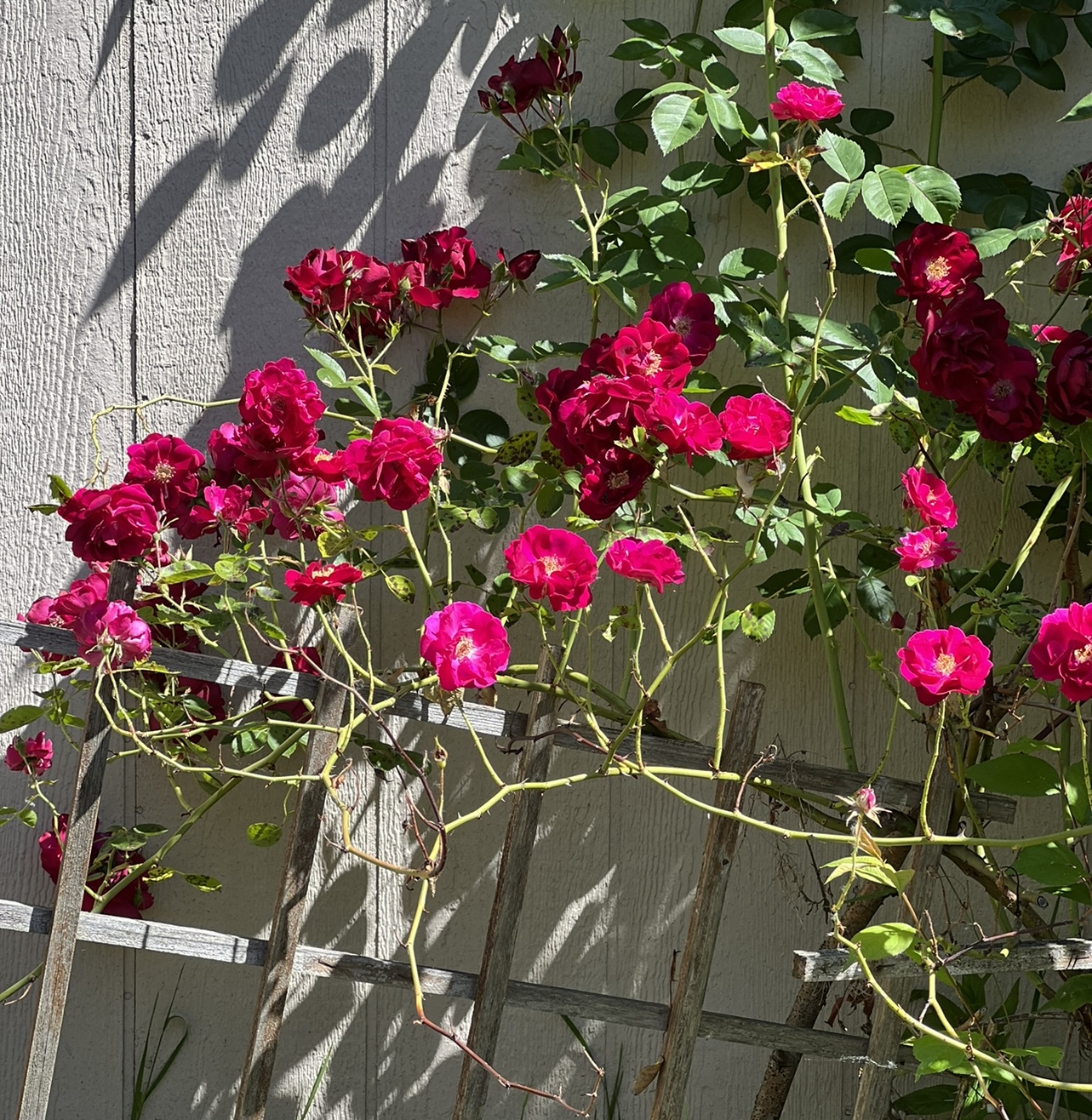
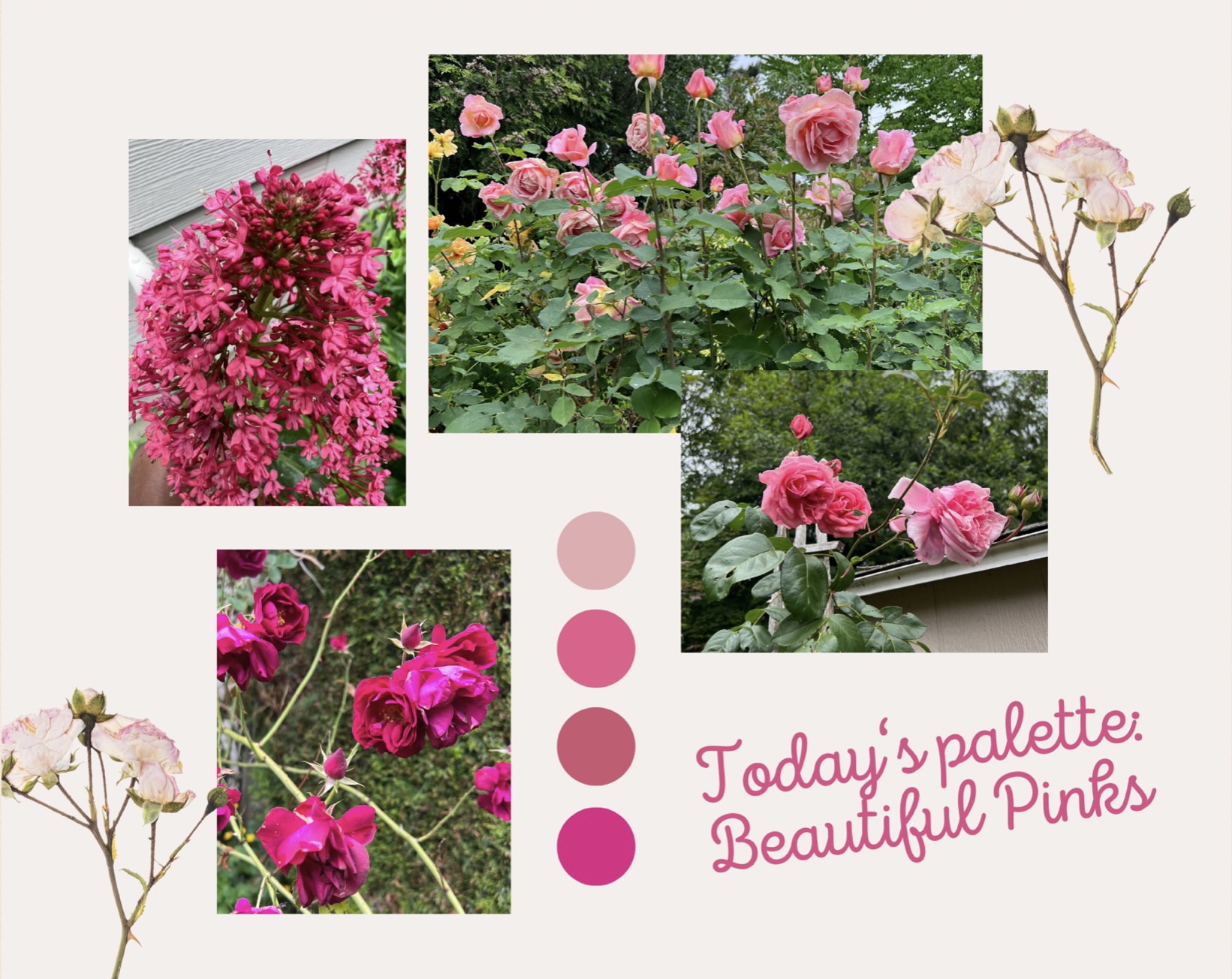
I’m so lucky to be surrounded by so many beautiful shades of pink these days – gorgeous flowers everywhere, including my parents’ rose garden, which is where I took these photos above! And, since there is so much pink around me, I thought it would be the perfect opportunity to learn more about one of my favorite colors, pink, which is often featured in my art.
Here are a few facts about this lovely color:
The color pink takes its name from a flower called Dianthus plumarius, a plant in the Carophyllaceae family. That flower is sometimes commonly referred to as “pink” because of its frilled edges. The word “pink” used to refer to a perforated pattern and that’s why those scissors with the zigzag edge are called “pinking shears.”
In other languages, the color we know as pink is named after roses instead!
Pink is one of the more common flower colors and is the result of natural pigments called anthocyanins, a type of flavonoid, which also produce the pink color of some fruit. Anthocyanins are just one category of flavonoid and, in addition to pink, are also the reason we have red, blue, and purple flowers. Over 9000 different types of flavonoids are responsible for all the beautiful colors we see in botany. Those pretty, bright colors help ensure flowers’ reproductive success by attracting pollinators.
How about the pink that we find in our art supplies? Where do they get their color from?
Those pinks were originally derived from rose madder dye extracted from the root of the Rubia tinctorum plant, originally found in India, the Middle East, Egypt, and the Mediterranean. Evidence of madder as a dye has been found in paintings and decor from these regions as early as 1500 BC.
Madder contains two dyes: alizarin and purpurin. In the late 1800s, the alizarin portion of madder was chemically synthesized, shifting the origin of pink dye from the natural rose madder plant to the less expensive synthetic alizarin. Nowadays, the more light-resistant quinacridone has predominantly replaced alizarin.
And if those pinks aren’t pink enough for you, there’s always the pinkest pigment ever developed – simply called “Pink” and created by UK artist Stuart Semple in 2016. You can read more about Stemple’s pigment (and his ongoing feud with fellow artist Anish Kapoor over the blackest black) HERE.
For all you artists out there: The next time you bring out your paints, be sure to take a few minutes to see if your reds and pinks are labeled “madder”, “alizarin” or “quinacridone”!
Until next time, dear friends, Happy Creating!
If you enjoy colors are much as I do, be sure to follow me on Instagram, @gracerajendran, where I regularly do a Today’s Palette post, highlighting the many gorgeous hues I see while I’m out and about! I’ll be posting a Today’s Palette single- color exploration similar to this one about once a month on this website. And, for more content, be sure to sign up for my monthly newsletter, Grace Notes (form at right)!